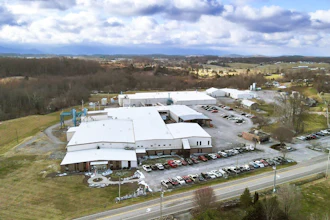
Yesterday, Stellantis announced a new deal to sell its idled assembly plant in Brampton, Ontario to Canadian defense contractor Roshel. The asset purchase agreement will include the plant and associated equipment, but the automaker stopped short of disclosing the sale price.
The move is in line with Stellantis’s FaSTLAne 2030 strategy to essentially save the company through a mix of cost savings, strategic investment and disciplined management that gets each remaining plant to 80% capacity use across North America by 2030.
Still, Stellantis and Roshel plan to set up a "strategic cooperation framework" to look for ways to work together to make vehicle tech for the defense industry.
In a statement, Antonio Filosa, Stellantis CEO, said the sale and partnership could open new opportunities in the defense industry and create a path to return the Brampton facility to productive industrial use. Diversifying into defense has become a potential new revenue stream for automakers. For example, in September, Lockheed Martin announced that it had already received missile housing components made by GM's new defense arm.
Roshel is expected to reopen the facility as a center of excellence for advanced manufacturing and strengthen Canada’s “sovereign industrial capabilities.”
Filosa recognized former Brampton employees for their contributions, and said, “After three years of paid layoff, we remain committed to working with Unifor on a fair resolution."
While the automaker hoped to work with the union to negotiate a settlement, Unifor called the sale a "betrayal."
Unifor National President Lana Payne said, “Stellantis has betrayed our members with an underhanded deal to sell the plant and walk away from its commitments to our members. Allowing the sale to move forward is a critical failure of the national auto strategy and breaks the federal government’s promise to protect autoworkers in the U.S. trade war.”
Unifor contends that Stellantis proceeded with the sale despite being in violation of the collective agreement and in breach of commitments to the federal government.
Prior to the announcement, Unifor said it was in the process of finalizing discussions with Stellantis, local and federal governments, and the union on the company’s future production footprint in Canada.
“This was not an inevitable outcome,” said Payne. “Selling the Brampton Assembly Plant to a defense contractor is a significant step backwards for Canada’s industrial economy.”
The union noted that the sale comes after a potential "paradigm shift" in the U.S. Congress that could provide a path forward to resolve the tariff disputes that threaten Canada’s auto sector.
Vito Beato, Unifor Stellantis Master Bargaining Committee Vice-Chairperson and President of Unifor Local 1285, said, “Brampton workers are being used as pawns and this whole rotten deal is being spun as a net positive because ‘some jobs are better than no jobs’. Well, that’s simply not true.”
Beato continued, “The reality is that thousands of good-paying Canadian auto jobs are being sacrificed permanently in exchange for hundreds of hypothetical jobs that depend on military procurement contracts that haven’t even been awarded yet.”
The union contends that the sale could not only sacrifice jobs at Stellantis, but thousands more throughout the automotive supply chain.
This is not Roshel's first expansion resulting from an automaker's contraction. Just last month, the armored vehicle manufacturer bought an old International Motors (formerly Navistar) plant in Springfield, Ohio. While 1,341 workers were laid off, many hope to be rehired by Roshel in the next six to 12 months. The defense contractor was so optimistic as to note that the Ohio workforce could double over time. Hopefully, some laid off Canadian workers could see a similar fate.