I ran into one of our sales guys the other day who had several hands-on stories about how every customer is different and how we adjust our solutions to each one of them. One story I found extremely interesting was the following: a large global beverage manufacturer needed a dependable way to manage consumer information and internal traceability across a remarkably diverse range of packaging formats. From Continuous inkjet coding to laser marking, the solution had to work reliably at high speed, in demanding production conditions and across multiple bottle and can types.
When One Production Line Handles It All
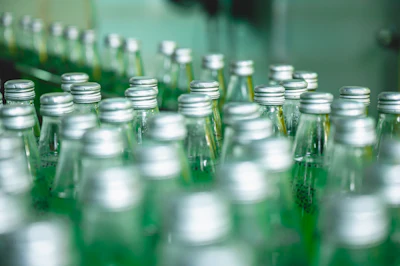
In beverage manufacturing, efficiency and traceability are inseparable. Production lines may handle metal cans, disposable glass bottles, returnable glass bottles and PET bottles—often within the same overall operation. Each format brings its own coding requirements, materials and environmental considerations.
The challenge becomes even more complex when every product needs two different codes: one intended for consumers and another supporting internal logistics. The consumer-facing code must be clear and durable, while the logistical code needs to remain visible and reliable throughout production, handling and return processes.
The Right Code for the Right Purpose
For glass surfaces, CO2 Laser printers are used to mark directly on the bottles or labels with high-contrast, elegant codes. Integrated with customers' production line systems, these laser coders help inform and reassure consumers about the products they purchase. The information can vary depending on the destination market, reflecting different regulatory requirements and consumer preferences.
Internal traceability calls for a different approach. On returnable glass bottles, Markem-Imaje inkjet printers apply codes directly to the bottle neck. The selected ink is alkali-soluble, allowing it to withstand challenging conditions such as condensation and high temperatures while remaining visible for logistics operations. At the same time, it supports the wash-off requirements associated with reusable bottles.
Traceability Beyond the Bottle
The coding requirements do not end with the primary container. Once bottles and cans have been filled and coded, they move to secondary packaging, whether that is shrink wrapping or cardboard cases. These packages also require coding, often across a range of shapes and sizes, to maintain traceability throughout the production line.
High Speeds Without Compromising Quality
Speed is another essential factor. Glass container lines can run at up to 60,000 bottles per hour, PET lines can code up to 36,000 bottles per hour, and metal can lines can reach 55,000 units per hour. While the equipment may be capable of operating at even higher speeds, the manufacturer takes a measured approach to reduce the risk of container breakage—demonstrating that reliability and product quality remain priorities alongside throughput.
Simplifying Ink Management
One particularly practical lesson from this story is the manufacturer’s approach to ink management. Given varying environmental conditions and the need for wash-off capability on returnable glass, the company adopted a single ink reference across all packaging formats. With the development of printers featuring secured consumable management systems, this approach has helped streamline inventory management, reduce the possibility of operator error and retain the flexibility needed for beverage production.
A Partnership Built to Last
This relationship has evolved over more than 20 years, adapting to new technologies and changing market demands. The manufacturer’s single-supplier approach reflects the value it places on reliability, efficiency and a strong working partnership. An Ultimate Coverage leasing arrangement also supports the operation through timely, meticulous maintenance procedures.
The Value of a Tailored Coding Strategy
The broader takeaway is simple: there is no one-size-fits-all answer in beverage coding. The right combination of laser technology, ink selection, equipment integration and service support depends on the packaging, the operating environment and the traceability requirements of each production line.
Stories like this are a useful reminder that Continuous inkjet technology is not simply about putting a code on a product—it is about designing a dependable solution around the realities of a customer’s operation.