For years, the packaging and processing industry measured success with familiar metrics: faster line speeds, lower labor costs, and bigger automation investments. But somewhere between labor shortages, stock keeping unit (SKU) proliferation, supply chain shocks, and mounting regulatory pressure, executives began to realize a difficult truth: speed alone no longer guarantees performance.
The modern manufacturing floor is not struggling because companies lack technology. It is struggling because complexity has outpaced capability.
That reality sits at the center of PMMI’s 2026 white paper, From Complexity to Capability: Integrating Systems, People, and Partnerships for Future-Ready Packaging Operations. The report captures a striking shift in how industry leaders now define operational excellence. The conversation is no longer about chasing automation for automation’s sake. Instead, executives are asking a more disciplined and strategic question: Does this investment make operations easier to run, maintain, scale, and recover?
That shift may sound subtle, but it represents one of the most important mindset changes the packaging industry has seen in decades.
For years, manufacturers pursued increasingly sophisticated systems to achieve efficiency gains. In many cases, those investments delivered impressive improvements in throughput. But complexity came with a hidden cost. Highly customized systems became harder to troubleshoot. Workforce turnover exposed gaps in tribal knowledge. More connected technologies created more data, but not always better decisions. Faster lines became vulnerable to slower recoveries.
Today’s leaders increasingly understand that resilience and productivity are no longer separate goals. They are deeply interconnected.
PMMI’s research finds that productivity remains the industry’s top priority, identified by 70% of executives surveyed. Yet what sits immediately behind productivity tells the more important story: automation (42%), operational resilience (41%), and equipment flexibility (32%). Those priorities reflect an industry redefining performance not around theoretical output, but around sustainable execution under real-world conditions.
In other words, the question is no longer how fast a line can run in perfect conditions. The question is how consistently it performs amid changeovers, staffing variability, evolving consumer demands, sanitation requirements, and supply uncertainty.
A machine capable of maximum throughput means little if operators struggle to troubleshoot faults, if maintenance teams cannot access replacement parts, or if changeovers consume hours of production time. In an era defined by volatility, the most valuable operations are not necessarily the fastest. They are the most adaptable.
The white paper repeatedly highlights a theme that emerged across discussions at PMMI’s Top to Top Summit: Simpler technology often delivers greater operational value than more complex technology.
Executives participating in the Summit pointed to workforce knowledge loss, obsolescence challenges, SKU proliferation, and rising technical complexity as the biggest expected drags on productivity over the next three to five years. Yet when asked which solutions would improve performance, leaders did not prioritize futuristic robotics or fully autonomous factories. Instead, they emphasized simpler operator-level technology, workforce upskilling, digital guidance tools, better collaboration, and more accessible data.
The implication is profound. The next competitive advantage may not come from adding complexity. It may come from removing it.
This is especially true when discussing workforce strategy.
For decades, manufacturing organizations assumed deep tenure and accumulated technical expertise would stabilize operations. That assumption no longer holds. Retirement waves, workforce mobility, multilingual labor environments, and thinning maintenance benches have fundamentally changed how plants must operate.
As PMMI’s report notes, the workforce challenge is less about absolute headcount than about skill compression. Plants now need systems that shorten the path from hire to independent performance.
That is why the report’s findings around workforce enablement are particularly important. Executives overwhelmingly favored practical, frontline-ready tools: QR-code-enabled work instructions, tablets, augmented reality support, searchable manuals, prescriptive data systems, and visual troubleshooting guidance. These are not glamorous technologies. But they directly address the operational reality many facilities now face.
The reason is simple. Workforce enablement has become one of the fastest routes to improved OEE (Overall Equipment Effectiveness).
When operators can access guided troubleshooting in real time, downtime shrinks. When changeovers are standardized visually and digitally, variability declines. When maintenance teams rely less on undocumented tribal knowledge, reliability improves. And when less-experienced workers can confidently navigate increasingly sophisticated equipment, manufacturers become more resilient.
Importantly, the report emphasizes that artificial intelligence (AI) is not viewed as a replacement for workforce expertise. Rather, leaders increasingly see AI as a wrapper around good documentation and accessible knowledge.
The industry is beginning to recognize that AI cannot compensate for poor operating fundamentals. If Standard Operating Procedures are outdated, maintenance documentation is fragmented, or machine data lacks context, AI will simply amplify those weaknesses even faster.
This perspective aligns closely with findings from PMMI’s Building an AI Advantage in Packaging Equipment report, which argues that successful AI deployment depends heavily on standardized data, operator trust, and clear operational use cases rather than abstract experimentation. Similarly, PMMI’s Knowledge Transfer for Machine Operators research reinforces the importance of visual learning tools, digital work instructions, and structured knowledge retention programs as experienced workers leave the workforce.
The throughline across these reports is unmistakable: Operational capability now depends as much on knowledge architecture as mechanical architecture.
The industry’s evolving thinking about scaling operations reflects this same philosophy.
Historically, growth strategies often centered on maximizing automation early. But executives at the Top to Top Summit expressed far greater caution. The dominant message from our research is clear: start small, stabilize processes, preserve flexibility, and scale in stages.
That measured approach reflects the realities of modern manufacturing volatility.
Consumer demand shifts quickly. Product portfolios change constantly. Regulatory pressures evolve. Material compatibility requirements continue to expand. Under those conditions, over-automating too early can lock companies into rigid systems that struggle to adapt.
The report repeatedly emphasizes that manufacturers are not simply scaling machines — they are scaling systems.
That means floor space, sanitation requirements, workforce readiness, utility infrastructure, packaging material compatibility, and changeover processes all become part of the scaling equation. A highly automated line that cannot adapt to future formats or shifting volumes may ultimately create more operational risk than value.
This explains why executives we talk to increasingly favor modularity, phased automation pathways, and scalable architectures.
Semiautomatic systems, once viewed as transitional or incomplete solutions, are now being reconsidered strategically. In uncertain demand environments, they can provide flexibility while allowing companies to validate processes and workforce readiness before committing to additional complexity.
This emphasis on staged scaling also reflects a broader evolution in capital decision-making.
The research we’re conducting at PMMI suggests the industry is moving away from first cost thinking toward total cost of ownership evaluations that include startup stabilization, workforce burden, obsolescence exposure, training requirements, and lifecycle support.
That evolution could fundamentally reshape relationships between OEMs and end users.
One of the most compelling themes in the From Complexity to Capability white paper is the growing recognition that collaboration itself has become a productivity tool.
Executives repeatedly emphasized the need for earlier OEM involvement, clearer governance structures, standardized data access, and ongoing lifecycle partnerships rather than transactional equipment purchases.
This may represent one of the industry’s most significant cultural shifts.
For years, OEM relationships often revolved around procurement cycles and installation milestones. Today, manufacturers increasingly want strategic partners capable of supporting installed-base visibility, obsolescence planning, digital support, and long-term scalability.
Our findings highlight a growing demand for standardized application programming interfaces, contextualized machine diagnostics, open data models, and shared performance metrics. Manufacturers no longer simply want machines that run. They want ecosystems that communicate.
That collaborative model becomes even more critical as organizations confront future-readiness challenges.
Notably, our From Complexity to Capability report intentionally reframes the concept of “future proofing.” Executives no longer believe it is possible to design operations immune to disruption. The pace of technological, geopolitical, regulatory, and demographic change is simply too fast. Instead, leaders increasingly focus on readiness.
That means building operations capable of responding quickly to disruptions.
The list of uncertainties executives identified is revealing: regulatory fragmentation, traceability requirements, population shifts, labor shortages, sustainability mandates, geopolitical instability, tariffs, evolving consumer expectations, and supply chain volatility.
These pressures are not isolated issues. They are deeply interconnected.
Consequently, resilience now extends far beyond inventory management or supplier diversification. It includes installed-base intelligence, cybersecurity readiness, workforce succession planning, infrastructure flexibility, lifecycle visibility, and organizational agility.
One of the report’s most important insights may be its recognition that future-readiness is as much cultural as technical.
Executives overwhelmingly identified “developing a culture of change” as the single most important factor in becoming future-ready.
In many organizations, operational systems still assume stability. But modern manufacturing increasingly rewards organizations that can adapt continuously. The companies best positioned for long-term success will not necessarily be those with the most advanced technology. They will be the ones capable of integrating systems, people, data, and partnerships into a coherent operating model.
That is ultimately the central message of From Complexity to Capability. The industry is moving from reactive operations toward readiness-based operations. It is moving from speed-centric thinking toward resilience-centric thinking. It is moving from isolated automation projects toward integrated capability strategies. And, perhaps most importantly, it is moving away from the assumption that complexity automatically creates competitive advantage.
The packaging and processing leaders who thrive in the coming decade will likely be those who recognize that operational excellence no longer depends on how much technology a facility possesses. It depends on how effectively that technology supports people, simplifies execution, and enables adaptation.
That is not a retreat from innovation. It is a more mature understanding of what innovation must accomplish.
In a world defined by volatility, capability — not complexity — has become the true competitive advantage.
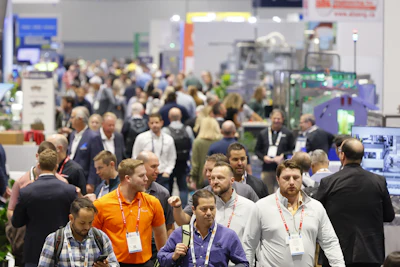
And the companies building smarter packaging and processing operations from the machine up are already defining the next generation of manufacturing performance. These leaders should look no further than PACK EXPO International 2026. With 48,000 professionals from 40+ vertical markets expected to attend, the event (Oct. 18–21; McCormick Place, Chicago) is the industry’s most efficient platform for evaluating equipment, identifying emerging trends, and making informed investment decisions — all in one place.
With targeted pavilions and curated planning tools, it’s easy to find exactly what every operation needs. The Food and Beverage Processing Zone returns to PACK EXPO International this year with the widest range of equipment to date. In today’s manufacturing environment, processing and packaging are integrated systems, making it critical to bring solutions for both under one roof. At PACK EXPO, attendees will discover tools and technologies to increase efficiency and achieve total system integration.
Attendees can navigate the show efficiently and quickly identify the solutions and suppliers that align with their operational needs. Planning tools like My Show Planner, Visual Category Search, Sustainability Finder, and a mobile app, sponsored by ProMach, help make every attendee’s visit more productive.
Don’t miss the Technology Excellence Awards that recognize the most innovative technologies not yet shown at a previous PACK EXPO. Attendees will be able to vote on-site, on the show app, or online for their favorite finalists in categories including Food/Beverage, General Packaging & Processing, and Sustainability.
PACK EXPO International attendees also can take advantage of personalized assistance from industry experts ready to help them find answers to their toughest challenges at the Ask the Experts Stations located on the show floor.
Visit packexpointernational.com today to receive priority registration and learn more about the event.