Wire mesh has applications across numerous industries. While deceivingly simple, this structural component has defined strength levels and deformation limits that allow it to perform according to standard. For design engineers, specifying high-performance wire mesh means defining geometry and material properties that align with environmental exposure and load expectations. This process ensures predictable performance for specific demands.
Core Mesh Specifications for Engineering Applications
Mesh specifications often cover wire diameter, aperture size and material grade. Each variable directly affects mechanical behavior, and teams will often select mesh based on a combination of factors.
Wire Diameter and Its Impact on Strength
Tensile capacity increases with a larger cross-sectional area. In most cases, small increases in diameter will produce larger gains in tensile capacity.
However, increasing the diameter also raises stiffness and weight. In some applications, controlled flexibility is necessary. Mesh needs to deform in a predictable way to absorb energy. If it is too stiff, forces may cause the material to malfunction or break.
In reinforced concrete, for example, wire diameter can affect crack control and load distribution. While thickness can improve support, wire meshes also need the right balance between strength and flexibility to meet the project’s specifications.
Aperture Size and Debris Containment
Aperture refers to the clear opening between wires. It controls containment, permeability and the open area percentage of the mesh.
In containment applications, the aperture needs to be smaller than the minimum expected debris size to be retained. In filtration systems, it determines particle retention and flow pressure.
Aperture selection should consider expected particle distribution, required drainage or airflow, and allowable system weight. Aperture and wire diameter together define the total open area of the mesh, so they need to be designed as a coordinated pair.
Material Grade and Environmental Resistance
Material grade determines corrosion resistance and long-term strength. Common options include 304 stainless steel, 316 stainless steel, 430 magnetic stainless steel and zinc-aluminum alloy coatings.
Corrosion reduces wire diameter over time, which directly lowers its tensile strength. Degradation rates can significantly shorten the mesh’s service life if the team selects the wrong material. Mesh specifications should clearly define the alloy type and coating to calculate the potential service life based on environmental exposure.
Defining Performance: Key Characteristics to Specify
Geometry and material form the foundation of the mesh. Performance metrics help engineers assess whether the product meets project requirements and what it needs to achieve.
Tensile Strength for Load-Bearing Applications
Tensile strength is the maximum load the mesh can withstand while being pulled apart without failing. Specifications should reference recognized testing standards to verify mechanical properties.
The elongation of the mesh is also critical. It should stretch in a controlled manner rather than experience sudden breaks or failures. The compatibility between mesh stiffness and its surrounding materials will influence stress distribution and long-term performance.
Energy Absorption for Dynamic Impacts
In systems exposed to impact, engineers need to define the mesh’s capacity for energy absorption. Scientists often measure this performance in joules or kilojoules, depending on the type of material or scenario. For example, the energy absorption capacity of chicken wire mesh-reinforced concrete is measured in joules, while heavier applications may involve kilojoules of energy.
Energy absorption depends on:
- Wire elongation
- Mesh pattern
- Node behavior under strain
Corrosion Resistance and Long-Term Durability
Over time, corrosion reduces each wire’s cross-sectional area, which impacts its tensile strength. Specifications should include coating thickness or mass and alloy composition. For example, zinc is well-known for its corrosion resistance and is a popular material for coatings or alloys.
Salt exposure, industrial emissions, high humidity and other environmental factors may also accelerate corrosion and must be part of the design considerations. Defined corrosion criteria help teams predict and ensure long-term structural reliability.
Applications in Key Industries
Engineering decisions prove their value in real-world conditions. These examples show how mesh specifications translate into measurable performance across demanding environments.
Geotechnical and Structural Engineering
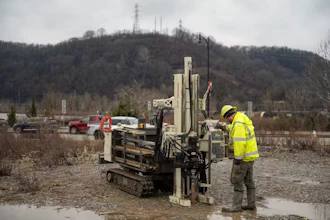
In geotechnical and structural applications like rockfall mitigation, mesh must contain debris and maintain integrity over decades. Systems like catch fences or rockfall netting will need to be attached to slopes to prevent rock movement.
With potentially heavy loads with significant impact energy, specifications should clearly define tensile capacity and corrosion protection level. Anchor spacing and system tension must align with mesh strength to prevent overstressing.
Advanced Manufacturing and Aerospace
In aerospace and high-precision manufacturing, dimensional consistency and material purity are critical. For example, modern aircraft engines use inlet screens to protect against foreign object debris during air intake.
Other applications include filtration and electromagnetic shielding. Wire mesh advantages in these sectors include maintaining stable operations and keeping out debris that may interfere with critical engines and machinery.
Ensuring Performance Through Verification and System Design
For improved accuracy and performance, specifications must come with proper testing and installation.
Critical Testing Standards (ASTM & ISO)
Mechanical testing under established systems like the American Society for Testing and Materials (ASTM) and the International Organization for Standardization (ISO). These institutions have defined standards and workflows that help companies prove and maintain consistency for relevant mesh applications.
Different applications need to follow specific standards. For example, ASTM A1064 is best for steel wire reinforcements for concrete. Alternatively, ISO 2194 is for woven wire screens for industrial purposes.
The Role of Digital Simulation
Finite element analysis allows engineers to model mesh behavior under expected loads before installation. Teams can evaluate impact forces or anchor spacing digitally, improving planning and validation processes and minimizing rework costs.
Tensioning Systems and Installation
Mesh performance depends on correct installation. Tension, anchoring, flexibility and cable reinforcement determine how the mesh manages loads.
If tension is too low, the mesh may sag and concentrate stress in specific areas. If tension is too high, it can overstress wires or anchors.
Clear Specification for Peak Performance
Specifying high-performance wire mesh requires a clear definition of structural requirements. Considering factors like wire diameter, aperture and material grade can help determine the mesh’s capabilities and potential weaknesses. Engineers can then define performance targets and reference validated standards to ensure wire mesh becomes a reliable and predictable structural component. This level of clarity ensures materials stay reliable and consistent across large-scale applications.