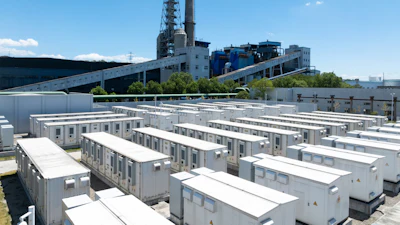
Alsym Energy, a developer of sodium-ion batteries, and Re:Build Manufacturing plan to partner on scaling sodium-ion battery cell production for the U.S. energy storage market. The collaboration looks to address the rapidly growing demand for safe, high-performance and cost-effective battery cells for energy storage systems (ESS).
By combining Alsym Energy’s battery technology with Re:Build’s industrial-scale manufacturing capabilities, which include experience in the assembly of battery packs and modules, the Massachusetts-based companies intend to establish a competitive battery cell manufacturing capacity to support national energy security needs.
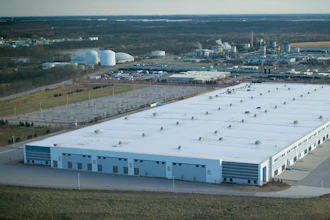
The project will focus on the development of commercial-scale sodium-ion battery cell manufacturing capacity in Re:Build’s existing facility in New Kensington, Pennsylvania. This approach ensures that ESS OEMs and developers can maximize tax benefits under the Inflation Reduction Act, including the 45X Advanced Manufacturing Production Credit, while reducing logistical lead times and shipping costs.
The global transition to renewable energy exposed the limitations of current battery technologies, according to the firms. For example, they argue the highly flammable and combustible nature of lithium-ion cells slow ESS deployments across the country and limit where they can be used.
Alsym Energy claims the non-flammability of its sodium-ion technology would enable faster deployment in urban and sensitive environments where safety regulations prevent lithium battery deployments.
“Our Na-Series batteries are filling the critical energy needs for AI data centers, utilities, commercial real estate and other industries,” Alsym Energy CEO Mukesh Chatter said. “Partnering with Re:Build allows us to accelerate our roadmap toward domestic commercial production. Together, we are providing a path for ESS integrators and developers to access high-quality cells that are not only non-flammable and high-performance, but are backed by a reliable, non-FEOC supply chain that is fully compliant with tax credit and defense procurement rules.”