The U.S. grid’s greatest point of failure comes down to a handful of aging, hand-built machines most people never think twice about: transformers.
After more than three decades building infrastructure at the intersection of energy and technology, starting with EV charging in its earliest days, I've watched firsthand how physical infrastructure constraints become the limiting factor for entire industries. Transformers are the next one.
Most of the country's grid runs through a small number of massive, custom-built transformers. Replacing even one takes years. That vulnerability is baked into the design of the system itself, and the loss of a single transformer has the potential to be devastating across an entire region.
Since 2020, a shortage of these transformers has pushed wait times as long as five years, creating a constraint that touches every industry that depends on reliable power. Pandemic-era supply chain breakdowns collided with rising electricity demand, and now data centers are pushing demand to new records.
Transformer demand in 2027 is expected to more than double what it was in 2020. Meanwhile, the transformers already on the grid are aging out, and an estimated 75 percent of distribution transformers have already passed the end of their expected service life.
The design of these transformers hasn't changed much since the first commercial transformer went into use in 1886. They still rely on Grain-Oriented Electrical Steel (GOES), a specialty material that's difficult and slow to produce. Skilled labor is scarce, supply is tight, and only about 20 percent of transformers purchased in the U.S. are manufactured domestically, with the rest imported from a handful of countries, including China, South Korea, and Mexico.
Wait times continue to increase, with no sign of relief in the near future.
Even a facility that manages to secure new transformers still has to get in line. Connecting new generation or large loads to the grid means waiting in an interconnection queue, and for projects completed in 2025, the median wait from request to going live topped five years.
I built Blink Charging through a similar moment. In 2009, we deployed charging stations when the EV market was still in its infancy, well ahead of the demand that would eventually catch up to that infrastructure.
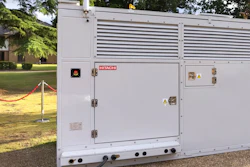
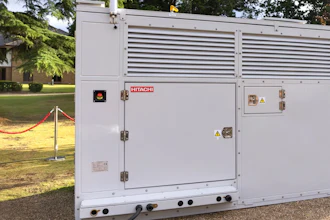
Diversification offers a way forward now, shifting load off the transformers causing the delay. On-site, distributed microgrids bypass both constraints at once, since they don't wait on grid capacity and don't rely on conventional transformers. Instead, they draw from energy sources generated and stored on-site.
Smart microgrids use solid-state transformers, built from ferrite and silicon carbide rather than GOES steel. Those materials are already in high supply because of their use in the EV industry, so equipment built around them isn't competing for the same scarce steel or the same backlogged production lines.
Solid-state transformers are also built from small, modular components, which means a damaged unit can be repaired by replacing a module rather than waiting years for a full custom-built replacement.
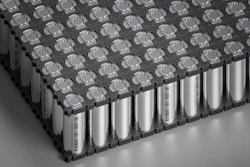
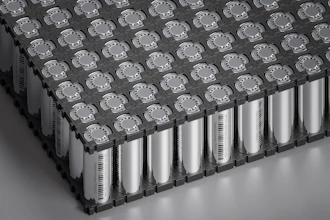
Battery storage adds another layer of resilience. Batteries make better use of the power already available on the grid, storing it when it's cheap and abundant and releasing it when demand spikes. A more resilient grid may not come from a handful of massive fixes. It may come from many smaller, distributed interventions working together, generating power on-site, forecasting demand, balancing loads intelligently, and storing low-cost energy for peak hours, exactly the kind of system our team at NextNRG has built our platform to manage.
The industrial sector has spent years adapting to material shortages and long lead times elsewhere in the supply chain. Power infrastructure deserves the same scrutiny, and the operators who start diversifying now won't be the ones caught waiting five years for a part.