Our office is a modern, open concept space but its walls are dotted with some throwbacks: old covers of IEN from as far back as the 1930s when the magazine first reached the factories and offices of manufacturing’s leading companies.
And while the newsprint looks dated, some of the headlines strike the same chord they would today, as industrial suppliers look to promote the problem-solving capabilities of their products to a subscriber pool facing many challenges.
IEN isn’t celebrating a particularly exciting anniversary this year, but we all know that America is. And as the United States commemorates its 250th year, it also serves as a reminder of how profoundly the nation's history has been shaped by the Industrial Revolution and all that came after.
The National Association of Manufacturers (NAM) recently released a statement that spoke to this tie, saying “The American story has always belonged to the makers, the builders, the innovators and the problem solvers,” adding that it’s because of them that “America’s greatest chapters are still to be written.”
The manufacturing industry has experienced some peaks and valleys over the past few decades, but with the semiquincentennial upon us, there is reason for optimism. The Institute for Supply Management (ISM)’s Purchasing Manager’s Index shows that, despite multiple headwinds, the manufacturing industry has been in expansion territory for the last six months.
As NAM points out, there is reason to believe in some great chapters ahead - if all goes according to plan - and many industrial stakeholders are sharing news. Taking advantage of the celebratory mood – in addition to a well-timed marketing message – many took the opportunity to underscore the event with some unique efforts of their own.
Whirlpool Corporation - the only American-owned major kitchen and laundry appliance manufacturer based in the United States is dovetailing America's celebration with one of its own -- the company's 115th anniversary. The company said that, starting in July, it would celebrate with its 20,000 U.S. employees who power the company's 11 manufacturing communities and additional corporate offices—and build toward a major consumer campaign to celebrate the company's official anniversary date on November 11.
Electrical distributor Sonepar marked the occasion by leveraging its “Bright Lights Brighter Futures” program to support the nation’s veterans. Sonepar recently announced that it would be providing free lighting upgrades to Veterans of Foreign Wars (VFW) posts across the country with partners PSG Energy Services, Acuity Brands and Cooper Lighting Solutions. The companies say the goal is to help upgrade outdated lighting in the space where veterans gather to connect and support one another.
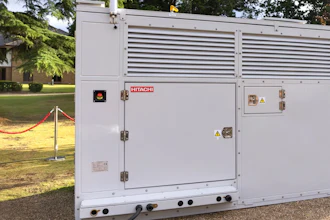
Automation leader ABB recently revealed the role it played in upgrading critical power infrastructure at the Smithsonian Institute’s Arts and Industries building in Washington D.C. In preparation for the 250th anniversary celebrations, the company said the modernization was “part of a larger revitalization effort to enhance safety, reliability and preservation for both staff and visitors during this history milestone.”
The Alliance for American Manufacturing (AAM) marked the occasion by unveiling its Made in America State Showcase – a resource that identifies hundreds of hand-picked American manufacturers. Curated to reflect items that embody the nation’s ingenuity and excellence, AAM says users can find everything “from George Washington’s Eau de Parfum to Hawaiian shirts truly made in Hawaii.”
Companies like Apple and Toyota took the opportunity to unveil their latest expansion efforts in early July – adding hundreds and thousands of jobs, respectively, as they continue to invest in U.S.-based operations.
And there are some companies who simply brought a message of hope and solidarity. As the manufacturing workforce and labor management company Veryable so eloquently put it in a recent blog, “America’s story has not lived only in founding documents, elections, or battles. It has lived on shop floors, in shipyards, inside workshops, and across production lines, where generations of Americans turned raw materials into the goods, tools, equipment, and infrastructure the country relied on.
“From wartime supply to industrial expansion, manufacturing gave the nation the capacity to defend itself, build at scale, and create opportunity for generations. As America marks 250 years, that legacy remains essential to what comes next.”
Certainly it’s the “what comes next” that’s the most tenuous. While PMI is in growth mode, manufacturing employment is not. A shortage of skilled workers coupled with policy uncertainty may be to blame – business conditions that have whipsawed the industry time and again. Luckily, we have history on our side, and many industry leaders with solid track records who have taken the opportunity to voice their support of U.S. manufacturing, to celebrate, and to set goals for how they’d build upon its foundation.