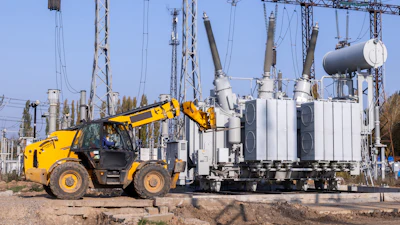
Americans have a lot of plans for the country's power grid. Some people want to expand renewable energy by building solar and wind farms. Others want to add new coal- or natural gas-fired power plants. There are those who want to provide power to some unknown number of data centers processing artificial intelligence algorithms.
To accomplish any of these goals, the country will need a significant number of pieces of equipment whose design was invented in the late 19th century: large power transformers. These giant metal structures are about the size of a two-story house and weigh as much as 400 tons – roughly equivalent to a fully loaded Boeing 747. They convert high voltages used to transmit electricity down to voltage levels people can use in their homes and businesses. And they are made largely in the same way they were when they were invented 150 years ago.
Many of the large power transformers in service in the U.S. and around the world are aging beyond their intended lifespans. And there aren't enough replacements to meet the world's needs. It can take more than three years for a company's order to be filled and delivered.
Transformers as transport systems
Large power transformers are crucial to transporting electricity over long distances. Power plants – whether coal- or gas-fired, hydropower dams, or solar or wind farms – are often far from the customers who need the electricity that's generated.
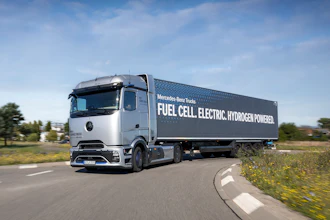
Transmitting power through wires generates heat, which over a long distance dramatically reduces the amount of energy arriving at the far end. To reduce energy losses, power companies use large transformers to increase the voltage. You can think of this like freight being loaded onto large trucks and directed over interstate highways. They can carry a lot of energy more efficiently than smaller cars could on smaller roads.
But the high-voltage power is not safe for a home or business to use right away, just as a semitruck at highway speeds shouldn't try to enter your driveway. So when the power arrives near a group of customers, it needs to take an off-ramp, going through another large transformer that lowers its voltage to levels regular customers can use. Then low-voltage lines act as local city streets, delivering the electricity the short distance from the highway exit to homes and businesses.
Between 2019 and 2025, demand for generator step-up transformers, those that connect power plants to the transmission grid, nearly tripled. And over the same period, demand for transformers to work as off-ramps more than doubled, with costs increasing 80%.
These devices are not mass-produced from automated assembly lines. They are custom-engineered to meet specific needs and demands for their intended destinations. If a specialized transformer fails during an extreme storm or heat wave, there aren't just replacements waiting in a warehouse somewhere.
The supply chain trap
What these transformers are made of is a big part of the delay.
One key ingredient is what's known as grain-oriented electrical steel. This is not at all average steel. It is manufactured using precise thermal and mechanical processes that position the steel's magnetic crystals in a single direction. The crystalline alignment allows magnetic fields to pass through the metal with low energy loss, which is crucial for handling large amounts of electricity. However, only a handful of specialized steel mills worldwide have the technology to produce it. Just one mill is in the U.S.
Also in short supply is copper, which is made into wires that are wrapped around the core of the transformer, typically made of steel, to achieve the correct voltage adjustment.
Work-around has its own problems
Because of the transformer shortage, it can take utilities and power producers more than two years to get equipment to connect new power plants to the grid – regardless of whether they are powered by nuclear energy, fossil fuels, solar energy or the wind.
To get around that delay, companies that run data centers to power artificial intelligence systems have sought to bypass the grid altogether, by installing dedicated, on-site natural gas power plants to run the computer centers.
That move has caused another supply chain problem. Gas turbines burn at over 2,000 degrees Fahrenheit (1,100 C), which is hot enough to melt standard steel. Turbine blades are manufactured with a complicated process out of very specialized combinations of metal and coated with ceramic heat shields.
As tech companies have placed more and larger orders, the time between ordering a gas turbine and having it delivered has stretched to between three and seven years. And prices in 2027 are expected to be nearly triple what they were in 2019, due to the increase in demand and still-rare materials.
What can be done?
A supply chain built in the 19th century is struggling to reliably serve power to the 21st-century economy.
Large power transformers are also key to upgrading the existing grid and reducing its vulnerability to large storms or extended outages.
The solutions are both concrete and complicated.
The U.S. Cybersecurity and Infrastructure Security Agency has recommended standardizing transformer designs, rather than having each be custom-built. That would allow manufacturers to produce more units more quickly, with an assembly line-style process. It would also allow utility companies to share emergency spares.
The U.S. Department of Energy has recommended deploying what are collectively called "grid-enhancing technologies." These methods include sensors that monitor in real time exactly how much power can be transmitted through long-distance wires and advanced software that can find alternative routes by which to distribute electricity from power plants to maximize what's available to customers. Together, these types of systems can allow the transmission of 15% to 20% more electricity than without them, easing bottlenecks while waiting for new transformers to be delivered.
Longer term, the U.S. could produce more grain-oriented electrical steel, process more copper and expand its capacity to build large power transformers.
All the ways people want to adapt, improve, expand and modernize the power grid are dependent on this one type of equipment. Without large power transformers, none of the efforts will get very far.
In a sense, leaders face a choice either way: solve these hardware shortages or accept the default consequences of grid congestion, delayed projects and rising costs. Resolving the transformer bottleneck would be what turns that passive reality into active choice.