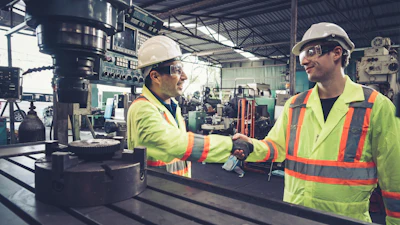
According to Mordor Intelligence’s 2025 market report, the U.S. contract manufacturing market currently stands at $724.35 billion and is projected to reach $966.84 billion by 2030. This growth is being fueled by reshoring initiatives and increased automation. Yet, despite the momentum, critical challenges could still threaten the industry’s full potential.
Contract manufacturing has become an essential part of the modern industrial landscape. Unlike traditional manufacturers, contract firms are built to adapt, leveraging advances in data protection, cybersecurity and flexible workforce models. Their operations often combine permanent and temporary workers, allowing them to adjust staffing levels and skill sets based on client demand and project requirements.
However, the sector isn’t without its hurdles. One of the most pressing is the ongoing manufacturing labor shortage. According to a recent Industrial Equipment News poll report, employment across the industry has fallen by 78,000 workers in the past year. For contract manufacturers, this issue is even more complex, as they often lack direct avenues to upskill or retrain their temporary workforce.
Still, contract manufacturing offers undeniable advantages. By outsourcing production, client companies can focus on their core competencies such as innovation, design, and research and development, all while gaining access to cost savings and specialized expertise from their partners.
Even so, contract manufacturers face many of the same risks as traditional manufacturers. As noted by Violin Technology and Katalyst Engineering, challenges such as supply chain disruptions, geopolitical instability, distribution issues and material shortages can quickly undermine efficiency and productivity.
In addition, hidden costs including customization fees, expedited shipping and inflationary pressures can reduce cost-effectiveness and strain financial performance.
Maintaining consistent quality and production control also remains a central challenge. Substandard raw materials, inconsistent procedures, or a lack of oversight can lead to quality lapses. Outsourcing inherently introduces a degree of separation that can make quality assurance and scalability harder to manage.
At the same time, technology integration, intellectual property protection, and regulatory compliance continue to demand close attention. Without strong safeguards in these areas, even a well-structured partnership can expose both parties to serious risks.
Contract manufacturing may not always take place under the same roof as the client company, but accountability remains shared. Adhering to ethical, environmental and regulatory standards is vital, not only to ensure operational success but also to protect a brand’s reputation. In an industry defined by collaboration, the line between manufacturing success and a brand-damaging misstep can be thin.