Create a free Industrial Equipment News account to continue
Manufacturing's Brain Drain Crisis: Capturing Critical Knowledge Before It Retires
Manufacturers are losing decades of expertise faster than they can replace it.
Michael Masser, Group Product Manager, Rockwell Automation
Aug 29, 2025
iStock.com/Blue Planet Studio
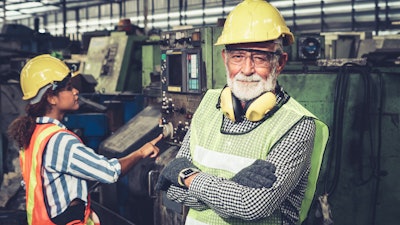
An experienced manufacturing supervisor announces their retirement. Without this supervisor’s expertise and guidance, the remaining employees struggle to keep up with the same operational standards.
Production quality slips, deadlines are missed and the plant workers are left struggling to keep up with the demand. This scenario reflects a reality many manufacturers are facing as they lose decades of expertise faster than they can replace it, fueling a skills shortage that can’t keep up.
Just in June 2025, the manufacturing sector lost 7,000 jobs, while approximately 415,000 manufacturing jobs remain unfilled across the U.S. These numbers only tell part of the story of the deeper crisis brewing: As these seasoned employees retire and leave the workforce, manufacturers are scrambling to fill the labor gaps.
In addition, manufacturers are dealing with the challenge of attracting and retaining employees with the desired skill sets, with 65% of manufacturers stating it’s a top challenge.
A recent State of Smart Manufacturing report also uncovered that this lack of skilled workers is the leading barrier to outpacing competition. This means the next generation of manufacturing workers has big shoes to fill.
The solution isn’t just to hire more people. It’s to build a system for capturing and transferring institutional knowledge before it retires.
Without proper knowledge transfer systems and training in place, manufacturing expertise from longtime engaged workers essentially walks out the door. This loss may cause impacts that go beyond staffing challenges, affecting internal processes and operations.
An experienced manufacturing supervisor announces their retirement. Without this supervisor’s expertise and guidance, the remaining employees struggle to keep up with the same operational standards.
Production quality slips, deadlines are missed and the plant workers are left struggling to keep up with the demand. This scenario reflects a reality many manufacturers are facing as they lose decades of expertise faster than they can replace it, fueling a skills shortage that can’t keep up.
Just in June 2025, the manufacturing sector lost 7,000 jobs, while approximately 415,000 manufacturing jobs remain unfilled across the U.S. These numbers only tell part of the story of the deeper crisis brewing: As these seasoned employees retire and leave the workforce, manufacturers are scrambling to fill the labor gaps.
In addition, manufacturers are dealing with the challenge of attracting and retaining employees with the desired skill sets, with 65% of manufacturers stating it’s a top challenge.
A recent State of Smart Manufacturing report also uncovered that this lack of skilled workers is the leading barrier to outpacing competition. This means the next generation of manufacturing workers has big shoes to fill.
The solution isn’t just to hire more people. It’s to build a system for capturing and transferring institutional knowledge before it retires.
When Experience Leaves, Critical Knowledge Goes with It
Without proper knowledge transfer systems and training in place, manufacturing expertise from longtime engaged workers essentially walks out the door. This loss may cause impacts that go beyond staffing challenges, affecting internal processes and operations.
Lengthy and complicated onboarding processes can increase the risk of operational delays. Every minute of downtime due to knowledge gaps can reduce production capacity.
For example, an experienced technician might diagnose and fix a conveyor belt issue in 20 minutes, while their replacement could spend two hours troubleshooting the same problem. These minor hiccups compound when mistakes in complex operations create productivity and quality issues that ripple across multiple workflows.
When combined with unpredictable supplier capabilities and customer demands, it can be difficult to keep up and maintain consistent production schedules.
Technology can help manufacturers address the operational challenges that come with staffing gaps, but it’s not a replacement for humans. And workers need to learn how to use technology properly.
Most factory managers (70%) consider workforce transformation the most critical factor to success, and almost half consider the cost of training to be the biggest hurdle.
However, without it, technology can’t deliver its full value and purpose of empowering people to work better and more efficiently. Treating the workforce evolution as a core to operational excellence, rather than just an HR initiative, is crucial to closing this skills gap.
Addressing the Knowledge Gap with Technology
Manufacturers must implement smart technology and connected worker systems to improve training and pass the torch of institutional manufacturing knowledge to the next generation of workers.
By doing so, manufacturers can bridge skills gaps, improve employee retention and enhance the overall employee experience.
To address the current knowledge gap, manufacturers should focus on three interconnected strategies:
Knowledge Capture through Digital Instructions:Digitized step-by-step directions with detailed visual images can streamline the onboarding process for even the most sophisticated tasks, breaking them down into simpler steps. These work instructions can ensure that any changes in procedures or product specifications are documented and updated in real time. By working from a single, accurate data source, manufacturing companies can use the data to track workflow histories and fine tune processes to decrease errors, reduce waste and maintain quality. Detailed instructions help ensure consistent performance across all experience levels, whether an employee has been working at your facility for a month or 5 years, the quality remains the same across completed tasks.
Embedding Quality in Digital Operations: Quality is one of the most important elements workers need to get right in manufacturing. Embedding quality into the day-to-day production steps helps reduce the time and money spent on remaking low-quality products. It also empowers employees to play an active role in product quality control. Implementing digital checklist sheets is one way to help guide staff through detailed inspections and protocols that are tailored to each role.
Continuous Improvement with Real-Time Feedback:By implementing a training system that provides instant feedback, facilities can track how employees are approaching and completing each task. This ensures that workers are completing tasks with accuracy and precision, building employee confidence through instant error alerts for immediate correction. This feedback also helps to plan for any deviations from the expected timeline, helping to create more efficient workflows and continuous improvement in operational standards.
The Future of Manufacturing Begins with Safeguarding Knowledge
If manufacturers act now to capture and digitize decades of knowledge from experienced workers, they can preserve the expertise needed for the future of the workforce, before losing it forever.
By empowering employees with real-time feedback on tasks, detailed digitized work instructions and embedding quality into daily productions, employees can be better equipped to maintain operational excellence and high performance across the factory floor.
Smart technology and connected worker systems not only help manufacturers improve training for entry-level workers but also helps them onboard more quickly. These tools ensure that organizations can safeguard the knowledge and skills their teams have gained over the years. The companies that successfully preserve their human capital will define the future of the industry.
Michael Masser, Group Product Manager, Rockwell AutomationRockwell Automation
Michael Masser joined Rockwell in July 2023 and is the Group Product Manager for Plex Connected Worker. He has over 18 years of experience ranging from business development, shipping and logistics to product management.