A newly patented formulation from Melt-to-Make is changing how manufacturers produce gummies at scale.
The dual-base system, granted U.S. patent protection in 2025, eliminates the variability, waste, and process complexity that have long limited high-volume edible production.
By stabilizing the chemistry so the base can be heated, infused, and processed without compromising texture or clarity, the innovation removes the formulation risks that traditionally slow down or derail industrial gummy lines.
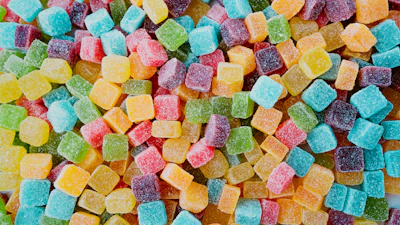
At its foundation, the patented technology delivers a shelf-stable, gummy base that arrives pre-flavored, pre-colored and formulated for large-batch processing. Manufacturers simply add active ingredients, reheat, mold and cool.
By engineering the chemistry to withstand multiple heating cycles and processing phases, Melt-to-Make removes traditional variables such as long cook times, pre-gelling, and long curing times that plague conventional gummy lines.
Engineering Out the Variables
Manufacturers of gummies typically wrestle with sourcing issues, loss batches and time constraints. Minor deviations in temperature or ingredient ratios or a slight change in the process can yield inconsistent texture, appearance or even a loss batch.
 With Melt-to-Make's patented system, manufacturers can eliminate and streamline processes.Melt-to-Make
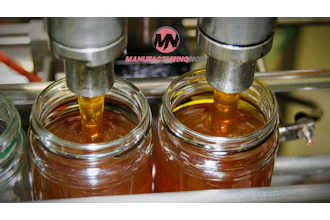
With Melt-to-Make's patented system, manufacturers can eliminate and streamline processes. The base is delivered with or without natural flavor and color, setting up manufacturers to only need to add active ingredients post-heating. Since the material remains functionally stable through reheating, it supports modular production workflows and tiered capacity.
Viewed as a semi-finished ingredient, the base enables process engineers to integrate it like other bulk solids or liquids. Repeat runs deliver consistency with little room for error. The company offers versions in pectin, gelatin and hybrid forms as well as reduced sugar options, enabling control over finish profiles while meeting clean-label and dietary demands.
For plant managers, this means higher throughput, reduced scrap and standardized product quality across shifts.
A Nutritionist's Turn to Process Innovation
 Melt-to-Make founder and co-inventor Sarah McLaughlin, MS RD.
"When we designed the system, the goal was not just speed; it was about using the best ingredients available and repeatable quality at industrial scale," she says.
By using natural ingredients, reducing sugar content and locking in texture through a patented formulation, Melt-to-Make aligns manufacturing efficiency with compliance and transparency.
Industrial Implications for Equipment and Production
For OEMs, equipment manufacturers, and integrators, the implications are tangible.
The system reduces the need for managing ingredients, complex formulation lines, extensive operator training, and frequent product changeovers. Facilities can implement the base like any other industrial material, less confection-lab setup, more factory-ready.
Automated lines benefit from the reduced variability, enabling higher yields, fewer rejects and faster qualification of new SKUs. Contract manufacturers and start-ups gain access to production-ready materials without building formulations from scratch.
Global Reach, Local Manufacturing
Since patent issuance, Melt-to-Make's technology has been adopted in more than 15 countries across North America and Australia, supporting over 1,000 B2B customers. The company also offers technical tools, formulation calculators, batch tracking, and training videos to ensure full adoption and success of the system by manufacturers.
The result: access to global markets for smaller players and scalability for large-volume producers, all driven by a standardized manufacturing approach.
What's Next for Edible Production?
The future of gummy and functional-food manufacturing will be defined by consistency, compliance and standardized scale, not novelty alone.
By patenting a process that merges ingredient science with industrial readiness, Melt-to-Make has positioned itself at that intersection. Their system serves as a model for how food manufacturing must evolve: standardized formulations enable faster innovation, less waste, and superior product quality.
As McLaughlin puts it, "Quality doesn't mean complicated. It means smart, scalable and sustainable, the next generation of manufacturing."