The U.S. metal fabrication industry is projected to grow a modest 3.5% in 2025 amid ongoing skilled labor shortages and supply chain volatility. Despite these hurdles, the company my grandfather started 62 years ago in his garage is aiming much higher.
At Miller Fabrication Solutions, we expect to grow by 50% over the next three years—an ambitious target in today's challenging manufacturing environment.
We'll do that by continuing to unlock efficiencies and expand capabilities. This target reflects the scale we're now capable of and ensures we can continue to deliver higher-quality products while sustaining performance.
Room to Grow
For manufacturers, one of the key impediments to growth is space. When that problem is solved, the other piece of the equation is maximizing it.
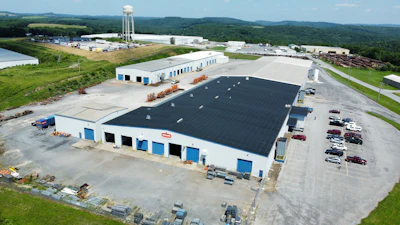
At our new, 186,000-square-foot Pine Creek facility, our fourth, Miller has expanded capacity, added advanced material-handling systems, and integrated state-of-the-art automation, including the Messer plasma cutting system and the TRUMPF TruLaser Center 7030. Each investment reflects careful planning and a strategic understanding of the capabilities required to serve new and growing markets.
 A look inside the new Miller Fabrication Solutions plant in Pine Creek.Miller Fabrication Solutions
The industrial sector in the United States is enormous. So even if it doesn't grow very quickly as a whole, there's still plenty of opportunity for companies that execute at a high level. We're also seeing new tariff-driven domestic manufacturing opportunities, as well as momentum in markets like data centers and power generation.
Space as a Strategy
Before Pine Creek opened, Miller's operations spanned three separate facilities, forcing parts to move back and forth multiple times before completion.
Sometimes, we handled components three or four times, shuffling them between plants before they were finished. We've now made changes to eliminate wasted time and inefficiencies that were embedded in our system.
The acquisition of Pine Creek gave us the space we needed to house critical operations under one roof. Machines that once lived miles apart now sit in sequential order, creating a linear production flow from raw plate to finished component.
The additional floor space also provides breathing room at the other facilities, enabling us to improve layouts and reduce congestion. Looming bottlenecks became a springboard for expansion.
At Pine Creek, visitors often comment about how much open floor space there is. While true, there's actually less available space than meets the eye. We intentionally left openings so we don't have to redesign the whole facility as we scale.
We've already drawn up plans showing where future equipment will go. We envision build-outs capable of supporting work even beyond our three-year, $150 million revenue target, giving us the flexibility to add machines or cells as demand dictates. That doesn't mean expansion is automatic. Each investment is still tied to customer needs and data—but the foundation is in place.
 A look inside the new Miller Fabrication Solutions plant in Pine Creek.Miller Fabrication Solutions
Reimagining Production Through Data
Miller has leaned heavily into data-driven decision-making as we have restructured production. In designing Pine Creek, one revelation came from analyzing part flows. Managers assumed sawed parts fed primarily into lathes, but the data revealed only 20% did. Yet 90% of lathe inputs came from the saws, leading to a new cell design where saws and lathes sit side by side, operated interchangeably by the same team.
We were surprised by the results, but that's why we ran the numbers. It changed the way we thought about layout. You can't just rely on assumptions.
 A look inside the new Miller Fabrication Solutions plant in Pine Creek.Miller Fabrication Solutions
Automation with Purpose
Automation has been touted as the cure-all for manufacturing labor shortages, but robots only succeed when paired with strong processes developed by people.
If you automate a good process, you'll make it great – and conversely, a bad process will get worse. A robot doesn't adapt the way a human does. If your inputs are inconsistent – if plates aren't cut right or tolerances are off—the robot still plows ahead, and then you end up with a defect.
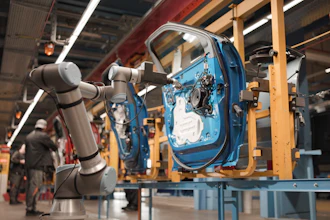
Our approach has been to apply automation at true bottlenecks, not just anywhere efficiency gains appear possible, without regard to the value stream. Following lean manufacturing principles, Miller automates to improve throughput rather than focusing on a single area. That requires us to carefully map where delays occur and then target those pressure points.
Welding is a good example. If we put a robot on a weld line that is in sequence with machines, but upstream machining can't keep pace with the speed at which the robot can weld, we've created a new problem. Parts will stack up between processes. We've learned to be intentional, deploying automation where it frees up throughput across the system.
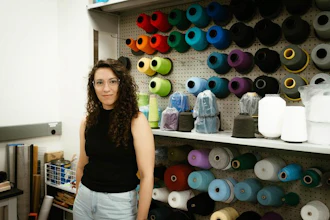
 Eric D. Miller is the president of Miller Fabrication Solutions.Miller Fabrication Solutions
Automation doesn't shorten a 10-minute process to nine minutes unless you assess and reprogram it. But it does ensure every part takes 10 minutes, every time. That stability improves our reliability.
In the end, our story is less about any one machine or facility and more about our deliberate alignment of space, data and automation to enable scalable growth. With bottlenecks cleared, workflows reimagined and capacity mapped out for years to come, Miller is competing like a global player.