Every technology revolution has two stories. The one we celebrate — the software, the platforms, the names that became verbs — and the one we rarely tell: the physical infrastructure and the people who built it.
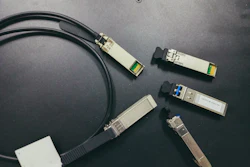
In the 1990s, as the internet rewired the global economy, engineers and field technicians were pulling fiber-optic cables through city streets and laying conduit across ocean floors. They weren’t on magazine covers. Nobody was writing think pieces about them.
But without them, there was no dot-com boom. Without them, Amazon was just a rainforest. The revolution ran on bandwidth, and bandwidth was built by hand, by people who showed up, learned the work, and did it with a level of precision the world depended on – whether the world knew it or not.
We’re on the cusp of the next great revolution. But this time, the stakes are higher, the timelines are shorter, and the infrastructure gap is more acute than most people realize. And once again, the revolution is being built by hand. Before we talk about AI, we need to talk about the grid. Not just what it’s being asked to carry now, but when it was built.
The electrical grid that powers modern America was built in the mid-twentieth century for a world that no longer exists. It was built for steadier weather, lower, more predictable demand, and loads that bore no resemblance to those of a hyperscale data center drawing hundreds of megawatts around the clock.
Today, the weather is more extreme, marked by severe storms and intense heat. Power outages are more frequent, and our dependence on reliable power has never been greater – not just for AI and data centers, but for the hospitals, water treatment facilities, and appliances that we assume will always be “on.”
That gap, between a mid-century grid and a 21st-century world, is the defining infrastructure challenge of our era. Closing it is not a software problem. It is an engineering and manufacturing problem, solved one piece of equipment at a time, by people who know how to build things that cannot fail.
Think about what it takes to modernize our electrical infrastructure at the pace this moment demands.
Right from the Start
An engineer designs protection and switching equipment for load scenarios that didn’t exist on any utility forecast three years ago. They have to get it right because equipment that fails in the field doesn’t just inconvenience someone; it takes down the power for everything connected to it.
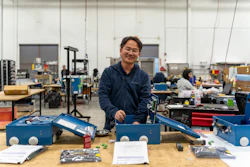
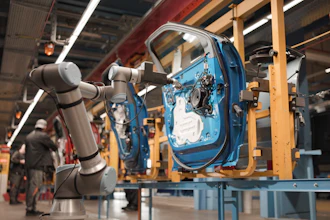
An assembler on the factory floor builds that equipment to precision with no room for error. A welder joins components that must carry electrical current through conditions that are growing more extreme every year. A field technician installs the finished product, often in challenging operating environments and on timelines that compress as demand accelerates.
These are not abstract job categories. They are people who carry the weight of the modern world without recognition because the work is what matters. They have been doing it for generations. The engineer who specs equipment today learned from someone who learned from someone who built the infrastructure that powers the hospital where their children were born.
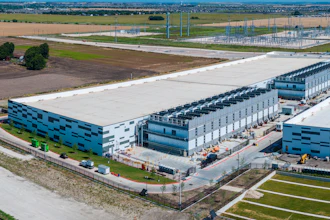
The AI buildout is accelerating an urgency that was already there. Data centers are being built at a pace not seen in decades. Utilities are receiving interconnection requests at volumes that strain their planning processes. Power purchase agreements are being signed for facilities that don’t yet exist, because developers know that securing power is the long-lead item — longer than permitting, longer than construction, longer than equipment procurement itself.
And every one of those facilities depends on infrastructure that has to be engineered, manufactured, and installed by human beings who know what they’re doing. This is what an industrial revolution looks like from the inside. It’s a factory floor running at full capacity. Field crews commissioning equipment in the rain. Engineers solving problems at the intersection of a century-old grid and a demand curve that nobody planned for.
What this moment demands is American manufacturing that can scale alongside this demand, building on the engineering expertise developed and refined over generations. In a world obsessed with the next layer of technology, it's worth asking what the foundational layer actually is. The answer isn't software. It isn't silicon. It's people who build the infrastructure that everything else depends on. People are the technology behind technology.
The Bigger Picture
The narrative that young people have absorbed — that manufacturing is a sunset industry, that the future belongs entirely to software — is not just outdated. It couldn’t be further from the truth. The most consequential work of the AI era is not all happening in front of a screen. It is happening in factories, substations, and equipment yards, carried out by people whose work makes everything else possible.
There is a reason to do this work beyond the opportunity, though the opportunity is real. The people who build the electrical grid are, in the most literal sense, powering the world. The lights that come on. The water that runs clean. The hospital that stays operational through a storm. None of it happens without people building equipment that works.
The people who built the internet’s infrastructure didn’t know they were changing the world. They just showed up, did the work, and did it right. The skilled men and women who have kept the power on for generations understand that better than anyone.
Their work has been holding up our modern world for a long time. Now, at the most consequential moment in the history of the grid, American manufacturing and the skilled trades are being called on to do what they have always done – build the things the world cannot live without.
The purpose and the urgency of this moment are real, and we don’t have the luxury of taking the grid for granted. In every revolution, the foundation is always physical, always human, and always overlooked until it’s needed most.
Anders Hultberg is Chief Operating Officer of S&C Electric Company, a manufacturer of switching and protection products for electric power systems. S&C has been manufacturing in the United States since 1911.