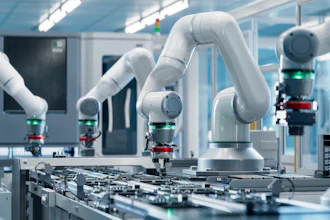
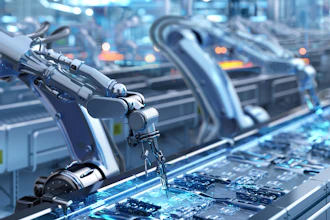
Equipment manufacturers and plant operators increasingly view AI as a lever, a way to generate performance gains with little supposed effort. In many ways, it is highly useful: predictive analytics and machine learning can be put to work flagging component wear before failure, or spotting optimization opportunities and process adjustments that boost throughput and quality.
The appeal of fewer unplanned shutdowns, tighter margins, and faster responses to equipment stress is very clear. If the process of ideation flows from machine to human, with the final decision made by people fully understanding of the context behind those decisions, the risks of AI are both minimal and directly manageable.
Yet the integration of AI into operational technology (OT), the machines, controllers, and systems that run industrial facilities, demands a different approach than the deployment of analytics in an office environment. The stakes are simply not equivalent.
A flawed dashboard metric might skew a business decision, but a flawed AI decision in a manufacturing plant can halt production, create regulatory exposure, or cause failures which harm personnel. Recent joint guidance from the NSA and CISA underscores this, stating that "OT systems are the backbone of our nation's critical infrastructure, and integrating AI into these environments demands a thoughtful, risk-informed approach."
If AI and OT are to mix, it cannot be rushed. This must be a process of disciplined integration, which considers every variable before a single AI agent is deployed.
OT Demands Different Thinking
OT operates under constraints that IT never faces. OT equipment lifecycles stretch over decades. Any upgrade window is tight, measured in hours or days, rather than the weeks and months of IT systems. Legacy systems, some built to specifications that predate cloud computing, remain a critical part of many plant operations.
OT downtime costs money in direct, measurable ways: lost production, missed customer commitments, cascading effects through supply chains. AI failure in OT is distinct from traditional equipment failure. Mechanically, operators might be able to predict the wear pattern of a bearing or spot the tell-tale signs of corrosion.
AI can degrade over time; even a model which has passed every initial test can invisibly drift away from its original training and purpose. This can also be done deliberately. Data poisoning attacks, where adversarial inputs are introduced to mislead the system, leave no obvious trace.
Further, AI lacks the clarity of physical machinery and even human-written code. The decision logic of deep learning systems remains opaque even to their designers. An operator may follow the guidance of an AI platform while having no insight into why the system reached that conclusion.
Deeper integration with IT networks means AI widens the cybersecurity attack surface. An AI system that influences production control, quality thresholds, or safety-related logic becomes operational technology, OT which, like many modern pieces of integrated machinery, may be laterally accessed from connected IT systems. Its reliability directly affects plant integrity, so AI should be governed and monitored like any other critical system component.
Placement Determines Risk
We should be clear that not all AI in manufacturing carries the same operational weight. The architecture makes the difference here. An advisory AI system that flags maintenance recommendations for human review preserves the operator's authority, agency, and decision- making power. The human stays in the loop, so oversight remains practical and clear. Such systems can add value with manageable risk.
An autonomous system that directly adjusts process parameters or modulates control logic is categorically different. It introduces a direct dependency between model behavior and plant operations, and its governance requirements scale accordingly.
Organizations deploying AI in OT must make deliberate choices about placement and answer key questions before even considering its deployment.
- Where does the AI sit in the architecture?
- What decisions does it inform, and what decisions does it make?
- What do we do if it goes wrong?
These choices align with, and should be given the same weight as, established safety engineering principles and cybersecurity controls. AI is not exempt from the rigor applied to other critical components.
Keeping Models Honest
Manufacturing environments are dynamic and ever-changing. Routines, product mixes, and suppliers vary over time, all while equipment ages and its parameters subtly shift. AI models are trained on historical data. They reflect the conditions that existed when that training data was collected.
When manufacturing environments evolve, an AI system that once delivered accurate predictions may grow increasingly unreliable while continuing to output confident recommendations.
Manufacturers must establish structured processes to detect model degradation early. This means setting clear retraining thresholds, validating AI predictions against actual outcomes, and maintaining audit records of model behavior over time. It means training operators to recognize when confidence should be questioned and, most importantly, understanding the limits of any analytical system rather than offering it blind trust.
Oversight fails in two ways. If operators follow AI recommendations without understanding them, the human is no longer in control. If they receive constant alerts, they begin approving them reflexively. Oversight only works when operators understand what the model is attempting to do, how confident its outputs are, and when their skepticism is warranted.
Integration as a Discipline
Used carefully, AI can be a powerful tool. It can deliver measurable value in manufacturing environments. But those benefits depend entirely on how the technology is introduced into operational systems. Organizations must understand precisely how AI integrates with existing control architecture, what safeguards are in place, and how model lifecycle management will be handled over years of operation.
Deployment of AI in OT is an engineering discipline. It cannot move at the same pace as IT expansion, and safety practices and cybersecurity controls should anchor every decision, as it would with new plant hardware. Equipment manufacturers and plant operators would never deploy a new piece of machinery without rigorous validation and clear operational oversight. That same standard should govern AI.
The moment an AI system influences OT in any way, it becomes operational technology and should be treated accordingly. Industry cannot reject AI entirely; those that do so are likely to be left behind when competitors have already used it to pick up the pace. It just has to be done right.
The goal is to integrate AI into OT responsibly, using established thinking to maintain the reliability and safety that industrial operations demand.
Denrich Sananda is the Managing Partner and Senior Consultant at Arista Cyber.