The prevailing narrative around AI in manufacturing often focuses on automation, speed, and labor replacement. But on today’s factory floors, a more urgent issue is emerging: knowledge loss.
Manufacturing isn’t just facing a hiring shortage. It’s facing an experience shortage.
In 2025, more than 415,000 manufacturing jobs in the U.S. remained unfilled. Looking ahead, nearly half of the 3.8 million roles expected to open by 2033 may go unfilled due to retirements and a shrinking pipeline of skilled labor. This isn’t a temporary labor cycle; it’s a structural workforce shift.
What makes this moment especially critical is that the departing workforce holds decades of tacit expertise. These are the operators who can diagnose a vibration anomaly by sound alone, who understand how a specific machine behaves under certain material conditions, who can troubleshoot a complex startup without consulting a manual.
Much of that knowledge was never formally documented. It lives in experience.
In many facilities, this expertise has historically been transferred informally, through shadowing, mentoring, and years spent working side by side. As workforce turnover accelerates, that informal system is breaking down. The result is not just slower onboarding, but increased variability, avoidable downtime, and higher operational risk.
As seasoned workers retire, that institutional memory leaves with them.
AI as a Knowledge System, Not Just an Automation Tool
Forward-thinking manufacturers are beginning to use AI differently, not simply to automate tasks, but to preserve and operationalize expertise.
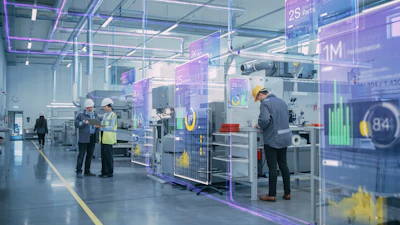
On-premise AI agents are being trained on a facility’s own production data, equipment logs, maintenance histories, quality records, and workflow documentation. Rather than functioning as generic copilots, these systems are built to reflect the operational reality of a specific plant.
The goal is straightforward: capture patterns, decision logic, and troubleshooting approaches embedded in historical data, then make that intelligence accessible to the next generation of operators in real time.
In practical terms, this means AI can surface insights that were previously locked inside spreadsheets, shift notes, and maintenance binders, connecting fragmented data into usable operational guidance. It transforms historical records from static archives into active decision-support tools.
This represents a modern form of apprenticeship.
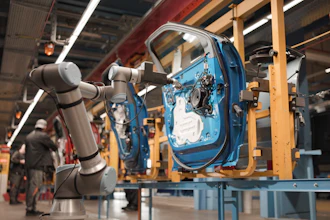
Imagine a veteran machinist retiring after 30 years on a specialized production line. An AI system trained on years of operational data can help guide less experienced operators through setup optimization, flag subtle performance deviations, or recommend corrective actions based on similar historical scenarios. It does not replace the operator’s judgment. It enhances it.
Instead of asking new hires to “learn by fire,” manufacturers can now provide context-aware guidance grounded in actual plant history.
Why On-Premise Matters
For industrial environments, AI deployment isn’t purely a performance decision; it’s also a security and operational integrity decision.
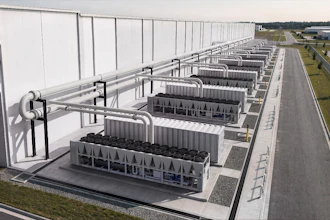
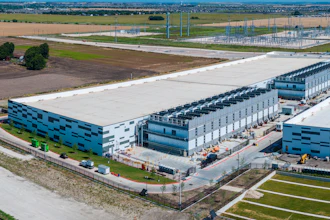
Manufacturers operate in highly proprietary environments where process data, tolerances, material specifications, and customer information are sensitive assets. On-premise AI ensures that this data remains inside the organization’s secure infrastructure while allowing deeper integration with legacy systems and equipment.
This proximity to the production environment also improves relevance. AI systems trained locally can account for unique machine behaviors, environmental variables, and workflow nuances that cloud-based general models often overlook.
In short, the closer the AI sits to the factory floor, the more useful it becomes.
The skills gap is often framed as a recruiting problem. In reality, it is also a knowledge continuity problem.
Manufacturers who treat expertise as data, something that can be captured, structured, and shared, are better positioned to maintain quality, throughput, and innovation even as workforce demographics shift.
AI-driven knowledge systems can:
- Accelerate onboarding for new operators.
- Reduce troubleshooting time.
- Improve process consistency.
- Preserve best practices across shifts and facilities.
- Support decision-making during off-hours or talent shortages.
Over time, these systems can also help standardize performance across multiple sites, ensuring that hard-earned process improvements in one facility do not remain isolated. Institutional knowledge becomes scalable rather than siloed.
Most importantly, they create resilience. When experience becomes embedded in systems rather than confined to individuals, organizations are less vulnerable to turnover.
A More Optimistic AI Narrative
The conversation around AI in manufacturing does not need to center on replacement. It can center on reinforcement.
Manufacturing has always relied on apprenticeship: passing knowledge from one generation to the next. What is changing is the medium. Today, AI provides a scalable way to extend that tradition.
The factories that will thrive over the next decade are not simply the ones that automate the fastest. They are the ones that preserve what makes them exceptional: the accumulated wisdom of their people.
AI, when applied intentionally, ensures that wisdom does not retire.