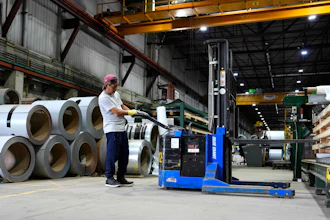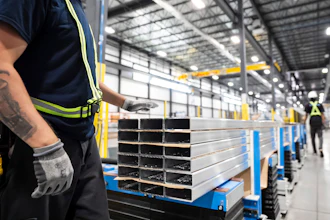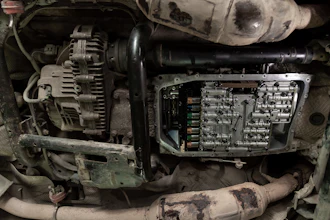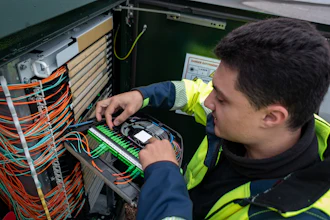
For nearly 200 years, life revolved around industrial machinery and manufacturing facilities. The industrial age changed everything about work. Today, it has been almost three quarters of a century since the information age entered the scene, once again changing the way people think about life and work.
Now the two industries are intertwined. While employment has declined, manufacturing is growing as a sector, with U.S. goods exports now more than double what they were 20 years ago. At the same time, AI is reshaping technology so quickly that many businesses are struggling to keep pace.
These forces are driving manufacturers to invest heavily in digital transformation. This year, 61 percent of manufacturers say they expect spending on enterprise software to increase, and supply chain management and planning is the leading growth category for AI applications.
For AI to Work, You Need Quality Data
Despite all of the excitement surrounding AI, many manufacturers are still struggling with inaccurate forecasts, inventory imbalances, and limited visibility across their supply chains. But the problem is not the technology. It’s the quality of the supplier data feeding it.
Manual supplier transactions, disconnected trading partners, and limited visibility into the broader supplier network create data quality issues that technology upgrades alone cannot fix. Before manufacturers can fully realize the value of AI and automation, they need to address the supplier transaction layer upstream of the ERP, analytics, and planning systems they rely on every day.
According to PwC’s 2026 Digital Trends in Operations Survey of 767 operations and supply chain leaders, 87 percent say poor data quality has affected their organization’s ability to achieve value from digital initiatives, while 89 percent say their technology investments have not fully delivered the expected results.
The Long Tail Of Suppliers is a Big Barrier
For manufacturers that have already invested in modern ERP systems and analytics platforms, the missing piece is often the supplier transaction layer that sits upstream of those systems. Strategic suppliers may already be connected, but the broader network of smaller suppliers is still being managed with emails, spreadsheets, and manual ERP entry.
This long-tail network gives manufacturers reach, flexibility, and access to the materials they need across a wide and diverse ecosystem. But it can be a vulnerability when those suppliers are disconnected, because that introduces inefficiency, delays, errors, and inconsistent data that ripple through receiving, inventory planning, invoice reconciliation, and demand forecasting.
Even the most advanced ERP or planning system cannot compensate for incomplete or unreliable supplier inputs. Until manufacturers solve for the full supplier network, automation will remain partial, and the data foundation will remain fragile.
What Can You Do?
Good data starts at the beginning. Before information enters ERP, analytics, or AI systems, it has to be correct, accessible, and standardized in the supplier transaction layer. We get there by replacing manual, fragmented processes with structured, reliable exchange across the full direct supplier community.
Manufacturers can do that by:
- Connecting purchase orders, order acknowledgements, advance ship notices, and invoices through a single automated network
- Replacing email, spreadsheets, and manual ERP entry with standardized supplier transactions
- Extending automation beyond strategic suppliers to each smaller, less technically sophisticated supplier
- Managing supplier outreach, testing, onboarding, and compliance through a network partner rather than internal teams
- Feeding the ERP with reliable inbound transaction data so receiving, inventory planning, demand sensing, and invoice reconciliation can work from accurate inputs
Without a clean supplier transaction layer, even the most advanced systems are forced to work with bad inputs. With it, manufacturers can improve visibility, reduce friction, and create the data foundation their operations actually need.
A Connected Ecosystem Is Essential
We’re ready for a new era. Not an industrial age or an information age, but a way of merging the two so that information continuously informs manufacturing, manufacturing changes behavior, and those new behaviors create better information.
AI is part of that future, but only if the underlying data is clean, connected, and bidirectional. Inbound supplier transactions must be machine-readable, ERP-connected, and reliable at the source.
Outbound order data must be structured and integrated as well. Without that foundation, AI tools are forced to work from incomplete records, manual inputs, and fragmented signals. With it, they can support better demand sensing, production scheduling, inventory planning, and supplier risk prediction.
Trading relationships and pattern intelligence across real supply chain transactions give manufacturers multi-enterprise context they cannot create on their own. This helps surface what is normal and what is an early deviation. That in turn improves the quality of the data feeding every decision.
The next age of manufacturing will not happen because software got smarter on its own. It will happen because manufacturers build a connected supplier ecosystem that allows intelligence to move through the entire operation from transaction, to insight, to action, and back again.