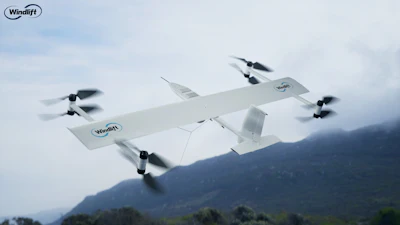
TAMPA, Fla. - As global demand for persistent surveillance and resilient defense technology escalates, Windlift, a North Carolina-based aerospace and defense company, is pioneering the next generation of tethered autonomous aerial systems. Its breakthrough G-Series platform is engineered to operate in extreme weather where other systems fail, addressing critical gaps in national security and infrastructure protection.
The defense innovator was signed by JOTO PR Disruptors because its performance-validated technology and mission-driven approach align perfectly with the agency's Anti-PR philosophy of elevating companies with proven, category-defining solutions. Windlift's G-Series isn't just an incremental improvement; it's a new class of tethered unmanned aerial vehicle (teUAV) built for the modern threat landscape.
Karla Jo Helms, Chief Evangelist and Anti-PR Strategist for JOTO PR, said, "Windlift is solving a problem that others can't: maintaining persistent eyes in the sky when conditions are at their worst. In a world of promises, they deliver proof. Their technology doesn't just meet a standard; it creates a new one for resilience and reliability in defense operations."
The partnership will leverage JOTO PR's proprietary Anti-PR strategy to amplify Windlift's leadership in autonomous flight and national security innovation. The campaign will position Windlift as an essential partner for defense and commercial sectors, highlighting the G-Series system's ability to provide continuous Intelligence, Surveillance, and Reconnaissance (ISR) and Counter-UAS capabilities in maritime, border, and other high-stakes environments.
Recent successful testing of the G-Series platform confirms its ability to thrive in high winds, a critical differentiator for naval and coastal operations. This capability is uniquely timed to meet urgent defense needs, including programs like the U.S. Missile Defense Agency's SHIELD initiative and the EU's "drone wall."
"The conversation around national security has shifted to proactive, persistent defense. You can't achieve that with technology that has to be grounded during a storm," Helms said. "Windlift provides an 'always-on' advantage that is indispensable. They've turned wind from an obstacle into an asset, and that changes everything for mission-critical surveillance."