A distributor can know how many bearings it has on hand but still struggle to answer a supplier’s question about a single production batch. The inventory total says what is available. Establishing which bearings arrived together, where they were put away and who received them requires more detailed records.
That information passes through several hands. Receiving staff checks the delivery, warehouse employees move the stock, and order pickers divide it among customers. Each handoff is an opportunity to capture the batch reference or lose it.
Two-dimensional barcodes give distributors a practical way to carry those details with the goods. Their value comes from making identification part of the work already taking place so that employees can record a product and its batch without repeatedly copying numbers from packaging.
What do 2D bar codes add to a product number?
A product number identifies the item being bought and sold. For many routine transactions, that is sufficient. You can receive two cartons of the same bearing under one stock number, even though they came from different production runs.
With 2D bar codes, the product identifier and batch reference can be encoded together in a compact symbol. An imaging scanner reads the pattern, and correctly configured software puts the decoded values into the relevant fields.
The distributor can then hold both cartons under the same product record while retaining their separate batch identities. If individual units need tracking, a serial number used with the product identifier provides that additional detail.
This capability is not exclusive to two-dimensional formats. Some linear barcodes also carry batch and serial data. Matrix symbols are useful where several fields must fit on a small label without requiring employees to scan separate codes or type the remaining information.
Choosing between types of 2D barcodes
Data Matrix and QR Code are two formats a distributor may encounter. Data Matrix suits compact labels and direct markings on components. QR Code can carry identification data or a web address that opens product documentation.
The distinction between those uses deserves attention. A code that opens a bearing’s specification sheet helps someone check its dimensions. It tells the warehouse nothing about the production batch unless that identity is included in the encoded data or available through the linked record.
When reviewing 2D barcode types, start with the information suppliers already provide and the fields the receiving system needs. Agreeing on the batch reference format is as important as choosing the symbol.
Test a supplier’s label in the actual warehouse application. A successful scanner beep confirms that data was read; the receiving screen shows whether the software understood it.
Where 2D scanning saves work at receiving
At goods receipt, 2D scanning can capture a product reference and batch number in one operation. Staff can check the populated fields against the expected delivery, resolve discrepancies and complete the receipt without transcribing each identifier.
Take a delivery containing two batches of the same bearing. If the employee records only the combined quantity, the distinction between those batches disappears from the inventory record at the first step. Capturing each batch separately preserves it for subsequent picking and customer queries.
The quantity still needs confirmation. Reading a carton code does not count its contents, although the application may retrieve an expected pack quantity from a product or packaging record.
During putaway, scanning the goods and destination bin associates the recorded batch with a storage location. Someone on the next shift can find it without asking who unloaded the truck. When stock moves again, recording the new location keeps that information useful.
The difficult handoff: opening a supplier’s carton
Industrial distribution involves breaking quantities down. A supplier delivers a full carton; one customer needs a few units, another needs the balance. The original label may remain on the carton long after some of its contents have left the warehouse.
This is where a tracking process needs careful design. The picked quantity must retain its batch association, and the smaller outbound package needs identification that matches what was packed. The remaining inventory also needs an accurate balance.
Suppose an order is filled using bearings from both batches in the earlier delivery. Recording the product number and total quantity alone would conceal that split. Recording the quantities drawn from each batch gives customer service something specific to retrieve later.
Scanning at picking can support these checks by comparing the selected stock with the order. The software must define which mismatches require intervention, including a wrong product or an unacceptable batch. Employees need a clear way to resolve the exception before packing continues.
Will the 2D label survive the journey?
A 2D label must be readable where it is used. Wrapping a small symbol around a package corner can distort its appearance. A seam may interrupt the pattern, while reflective tape can introduce glare.
Size matters for the individual elements within the symbol. Shrinking them to save space eventually makes them difficult for the intended scanner to resolve. Sufficient contrast and an unobstructed margin around the code help the reader locate and decode it.
Matrix formats require a compatible imaging reader. A conventional linear-only laser scanner cannot read them, and equipment suited to paper labels may struggle with a direct mark on a reflective metal part.
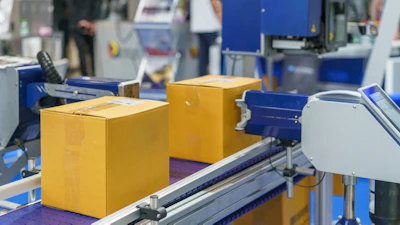
Check samples at the receiving and picking stations using normal working distances. For direct printing on corrugated packaging, also examine ink spread and surface texture. Barcode verification can measure print quality against defined criteria, providing information that an occasional successful scan cannot.
Answering the supplier’s batch query
If the supplier later flags one batch of bearings, the distributor should be able to retrieve its receipt, locate the quantity still held and identify the shipments that contained the rest. The printed code provides the identifier; the recorded transactions provide the history.
Those records become especially useful when stock has been divided among several customers. Staff can investigate the relevant deliveries instead of treating every sale of that bearing as potentially connected.
Before expanding a new system, follow a batch through receiving, a bin transfer, a partial pick and shipment. Ask an employee who did not handle it to locate the remaining stock and identify the customer delivery. Any gap they find points to a handoff that needs attention before the same problem repeats across thousands of orders.