Before Joe Stephens led Michigan fastener, bearing and fluid power distributor Motor City Industrial and, later, Houston sealing and industrial product provider APG, he spent roughly a quarter-century at Fastenal — including the last 15 years of that span as a vice president covering its operations in the central U.S. His territory included Illinois and Missouri, where, he said, his team frequently faced off with another Midwestern distributor: E&R Industrial.
“They were very difficult to displace,” Stephens – now E&R’s new CEO – said during an interview late last year. “They were quite the competitor; it was actually really frustrating how deeply loyal their customers were.”
The last decade-plus saw executive and company each take different paths: Stephens joined a private equity firm before taking the helm at Motor City and then APG, while E&R was acquired in 2013 by Grainger. Then, over the past two years, they converged again. After a decade as a Grainger subsidiary, the MRO giant sold E&R to a group of investors – led by Minneapolis’ Spruce River Holdings – and Stephens subsequently became aware of an opening with the company’s new ownership.
“When I heard the name and saw the opportunity, I was super excited about getting involved in the organization on the reputation of the brand alone,” Stephens said.
Stephens, along with former Motor City Chief Revenue Officer Jason Brown, joined E&R in September, and the company’s new leader set some lofty goals for the business moving forward.
“One thing about bringing private investors into an organization like this is it gives you the capital you need to scale, and scale quickly,” Stephens said.
“We hope to complete two to three acquisitions a year.”
Helping Industrial Giants Run More Efficiently
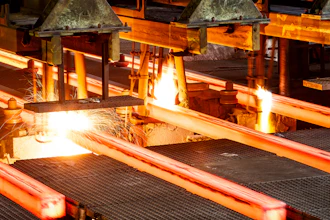
E&R became an independent business once again as it entered its 55th year of operations overall. Ernie Pizzimenti founded the Michigan company in 1969, and it eventually passed to the second generation of the Pizzimenti family with son Jerry serving as president — leading the company through what Stephens called “hyper-growth.” During that time, E&R would also establish the strengths that distinguished it in the market and made it both a thorn in Stephens’ side and an attractive target for Grainger: an emphasis on metalworking, an approach guided by its sales staff and its technology, and its focus on “large manufacturers with complex operations and high employee counts.”
 E&R Industrial CEO Joe StephensE and R Industrial
Grainger said when announcing its takeover in 2013 that it had added “an industry-leading team of metalworking experts” that would bolster its capabilities in manufacturing end markets. Stephens said that E&R’s culture of “salesman-customer relationships” remained intact under Grainger’s ownership, while the parent company “did a great job of professionalizing the organization and creating some processes and procedures that made the company better in the back office.” E&R’s “well-known brand” and position in the marketplace helped make the company an appealing target when it came on the market after a decade under Grainger.
“That is the most difficult thing to replicate — in any investment, for that matter,” Stephens said.
But E&R’s market presence wasn’t the only thing that drew suitors; Stephens pointed to broader factors that continue to bring would-be investors toward the distribution market as a whole.
“There still remains quite a bit of fragmentation in the MRO, and metalworking specifically, industries,” Stephens said. “And so that’s kind of a ripe environment to get an infusion of capital in a company this size to try and get a larger geographic footprint.”
But amid the push to grow rapidly, Stephens stressed that the company will also remain committed to its historic niche.
“E&R is unique in the sense that we’re not trying to be everything to everyone; we’re trying to be a supplier to large American manufacturing,” Stephens said. “We don’t really stray very far from making American manufacturers run more efficiently through data.”
Bridging the ‘Dual Identity’
E&R plans to do that in the future by bridging what Stephens called the “dual identity” of today’s MRO market: on one side, national distributors with a host of technology, data and business intelligence solutions, and on the other, independent regional distributors that play a critical role in product selection for their customers.
“What E&R will do going forward is combine those two into a solution that not just serves the needs for business intelligence, but also serves the customer’s remaining need for product selection assistance,” Stephens said.
To accomplish that, the company intends to focus on “four basic components” spanning the entire sales process: understanding how products move through customer facilities; creating process maps to optimize efficiencies throughout those paths; implementing those processes; and, finally, capitalizing on the”enormous” amounts of data generated as a result.
“Summarizing and categorizing that data into actual actionable business intelligence is where we really shine,” Stephens said. “Showing customers how and where they buy product is the true product that we’re selling.”
Investing in Outside Partners — and Internal Operations
As E&R accelerates its expansion efforts in the coming months and years, Stephens said that he intends to broaden its geographic scope while maintaining its focus on its existing market. Today, the suburban Detroit company operates six other locations, spanning from suburban Baltimore and Philadelphia through Southwest Ohio and two Indiana hubs to the suburbs of St. Louis. Stephens said that he wants to move beyond that mid-Atlantic to Midwest corridor “as quickly as possible” — within the bounds of industrial distributors.
In particular, he hopes to find companies that match E&R’s focus: improving the customer experience using technology.
“It’s not really about geography, it’s not really about product,” Stephens said. “We’re not trying to restrict ourselves, but we do recognize the place in the market we hold, which is: industrial distributor to large manufacturers.”
Persistent sluggishness in manufacturing and uncertainty in the broader economy, which helped dampen M&A activity in 2025, hasn’t curbed the company’s expectations in the acquisition market, either. Although higher borrowing costs are forcing companies in every sector to be selective when it comes to investments – and all businesses are limited to what the market can offer at the time – “it doesn’t change the fact that there’s still lots of great independent distributors selling MRO products [that] have been doing so for a very long time.”
“That’s an easy deal to make regardless of what the capital constraints would be at the time.”
Stephens also noted that E&R has some “pretty aggressive” expectations for organic growth in addition to its M&A strategy, including investing in its sales staff — long the key cog in E&R’s operations and, moving forward, the people who will guide the implementation and coordination of E&R’s equipment and supplies on customers’ production floors.
“The regulator of our growth,” Stephens said, “is how many people we can tell this story to, and how many customers we can solve problems for.”
This article originally appeared in the January/February issue of Industrial Distribution magazine. Sign up here to subscribe to ID’s Today in Industrial Distribution daily newsletter.