Industrial manufacturers are feeling the strain of a skilled labor shortage that’s only getting worse. While much of the conversation focuses on the shop floor, there’s another growing gap that often gets overlooked: the loss of technical sales talent.
Seasoned machinists and sales reps – many trained through apprenticeships and hands-on sales experience – are retiring, and not enough trained workers are stepping in behind them.
According to the U.S. Bureau of Labor Statistics, only 4.5 million of the 15 million Americans working in manufacturing are under the age of 35. Nearly half are 45 or older — a trend that simply isn’t sustainable.
That shortage isn’t just affecting production. It’s disrupting the sales channel and affecting end users, too.
Distributors expect guidance choosing and applying the right tools. End users still need someone who can stand at a machine and help solve a problem. But with shrinking teams and widening territories, many industrial manufacturers are struggling to keep up.
That’s where Independent Manufacturers’ Representatives (IMRs) are stepping in. An IMR is an outsourced sales representative that serves multiple, non-competing manufacturers in a specific industry or territory, bridging the gap between manufacturers, end users and customers.
IMRs bring deep application knowledge, strong distributor relationships, consistency in territory and years of experience — all of which are difficult for internal teams to realistically sustain. As more manufacturers grapple with limited headcount, increased costs and rising expectations, outsourced sales teams are proving to be a flexible and cost-effective answer.
This article explores why IMRs are playing a critical role in industrial sales and how they’re helping manufacturers stay competitive despite shrinking talent pools.
Why the Skilled Labor Shortage Is Hitting Manufacturers Hard
A significant part of the problem is perception. Many younger workers see manufacturing as a dirty or physically punishing industry, even though most shops today are state-of-the-art. But because of that gap between perception and reality, fewer young adults are choosing careers in machining or tooling. Those who do enter the field tend to have strong computer programming skills but limited hands-on experience, which creates its own learning curve.
Distributors are feeling similar strains as well. Many once relied on experienced sales and engineering teams who knew the tools and local shops through long-term relationships. Those teams now have fewer long-tenured people, and newer hires often lack the background needed to help customers select or apply products. Training these hires takes time and resources that are likely scarce.
Together, these shifts create a strain that is no longer limited to production lines. It reaches every part of the industry, including sales and technical support.
The Hidden Sales Problem No One Talks About
Unfortunately, this lack of experience also yields challenges for sales representatives out in the field.
Many newer sales hires may come into this industry with strong communication skills yet limited real-world manufacturing exposure. That gap creates pressure when a distributor or end user expects guidance that goes beyond a catalog page. And as territories widen even as sales forces shrink, the burden often shifts to simply whichever sales rep can respond the fastest.
In these scenarios, the customer may choose a different brand simply because someone else showed up first. Or a new distributor relationship may stall because there is no one available to help their team learn the product line. Every lost touchpoint or delayed response risks losing deals to competitors with better field coverage. These issues rarely appear in revenue reports but nonetheless have a massive impact on sales results.
The shortage has created a widening gap between what manufacturers expect from the field and what internal teams can cover. That gap is now one of the main reasons many companies are turning to outsourced sales support.
Hybrid Sales Teams Could Be the Answer
The strain created by the skilled labor shortage has pushed many manufacturers to look outside their walls for help. IMRs offer a mix of field coverage and technical know-how that is difficult to build quickly with internal staff. Outsourcing sales to an IMR can be an excellent way to keep sales activity steady and expand into new territories or markets while still maintaining the level of support distributors and end users expect.
And this approach doesn’t have to be all or nothing; a hybrid approach that combines a direct sales team alongside an IMR team can create a unified force that gives manufacturers the best of both worlds:
- Product expertise and stellar account management from the in-house sales team.
- Speed, flexibility and deep-rooted relationships from the IMR team.
Let’s explore the advantages an IMR team can bring to manufacturers.
Technical Knowledge Built Through Repetition
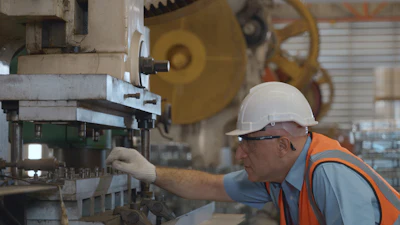
IMRs spend their days standing at machines and working through applications. They see a wide range of production challenges across many different end users, which gives them a stronger foundation than someone who is new to the field.
A rep who has visited hundreds of shops can often solve problems faster than an internal hire who is still learning how tools behave in different environments. That kind of exposure is tough to replace, and it often becomes the difference between a stalled sale and a steady customer.
Relationships That Give Manufacturers a Head Start
Many IMRs have worked with the same distributor groups for decades, too. They know which branches support different types of accounts and the end users who need more frequent help.
When a manufacturer partners with an IMR, they gain access to this network immediately instead of spending months trying to build it from scratch. That familiarity also shortens the time it takes to introduce new tools or product lines and increase sales faster.
Faster Field Coverage When Needed
Internal teams often cover several states, which slows response times and makes onsite visits difficult. IMRs usually have a local presence, so they can stop at a shop the same day if a part isn’t running or if a distributor has a question they cannot answer.
That presence matters. It keeps tools running and helps a manufacturer stay visible in markets that might otherwise feel overlooked.
These advantages explain why outsourced sales support is such a valuable solution for manufacturers dealing with tight staffing and rising demands from distributors and end users.
Outsourcing Your Sales Force Can Be a Smart Move
The shortage of skilled workers has changed expectations for manufacturers. Many internal teams no longer have the capacity or field experience to handle support for every account, but fortunately, outsourced sales teams can step into that space.
IMRs give manufacturers a way to grow without adding full-time staff. They help protect distributor relationships by responding quickly when something goes wrong and help manufacturers stay visible in markets where internal teams cannot visit often enough.
Building hybrid sales teams can give manufacturers a realistic way to meet growing demands when experienced workers are hard to find. After all, restructuring an entire sales team can be a daunting task.
Patrick McKeever is the president of Durrie Sales, an industrial manufacturers' representative agency specializing in cutting tools and industrial products representing U.S. manufacturers in the Southeast, Midwest & West Coast.
This article originally appeared in the January/February issue of Industrial Distribution magazine. Sign up here to subscribe to ID’s Today in Industrial Distribution daily newsletter.