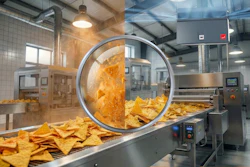
Today’s food processing facilities are operating at a fast pace to keep up with the consumer demand for frozen and prepared foods. Due to these tight schedules, workers have to move quickly to keep production lines moving while also cleaning and sanitizing processing areas.
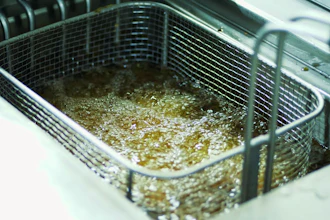
Because these facilities handle cooking, frying and packaging, their floors are exposed to slick hazards as well as cleaning substances that may cause accidental slips and falls that can leave workers seriously injured. Slip and fall accidents are a leading cause of workplace injuries, and a single slip-and-fall injury claim costs a company more than $48,000 on average, according to National Safety Council analysis of workers’ compensation data.
For food processing facilities, these challenges can have a major impact on their bottom line. How can they address these issues? One answer is to invest in high-traction safety flooring to protect workers from ongoing slip hazards while meeting strict hygiene and sanitation requirements.
SLIPNOT
Temporary Methods Introduce Risks
Flooring in food processing facilities cannot have holes or spaces that can collect moisture and dirt. It must be nonporous, easily cleaned, have a chemical resistance and meet strict slip resistance standards. For decades, facilities have used metal diamond plate, dotted metal, safety tape and grip paint. However, these temporary fixes quickly break down and create hazards. They pose risks due to the following reasons:
Poor Slip Resistance
Raised metal patterns like metal diamond plate and dotted metal lose much of their traction when wet. When liquids, fats, grease or oils are on the floor, it can make these low-friction surfaces even more slippery. Safety tapes, paints and thin coatings sit on top of the floor rather than bonding with it. Continuous traffic tears at the edges of these materials, which can lead to slips, trips and falls.
Low Thermal Shock and Chemical Resistance
Daily maintenance involves cleaning floors with harsh sanitation chemicals along with hot water or steam. During washdowns, the surface temperature changes anywhere from 40°F to 180°F multiple times a day. The floor expands and contracts at different rates, testing its thermal shock resistance. Over time, this destroys adhesive bonds and causes epoxy coatings, safety tapes and paints to crack or separate from the floor.
Hidden Bacteria Traps
When temporary materials begin to wear down, they create hygiene and compliance issues. Cracked paint and peeling tape edges form hidden gaps that can catch moisture and fine food particles. Standard cleaning sprays cannot reach inside these tiny gaps. Because food and water get trapped inside, mold and bacteria can easily grow.
Attempting to fix a slippery zone by drilling holes to bolt down materials adds to these risks. Standard mechanical fasteners create open bolt holes and unsealed seams beneath the new metal sheets. During washdowns, moisture flows over the floor where it can pool inside these gaps.
Key Benefits of High-Friction Surfaces
To solve these maintenance and hygiene challenges, facilities are investing in permanent, slip-resistant safety flooring and surface technologies to transform standard mixing tank platforms, crossovers, stairs, catwalks and mezzanines into safer non-slip environments. The high-friction surface can be manufactured directly onto metal, including stainless steel plates, grates and ladders for food processing facilities.
Once installed, facilities that have integrated permanent high-friction surfaces into high-risk areas have reported reductions in slip-and-fall injuries of up to 90%.
The specialized surface has several benefits, including:
Reliable Grip: The surface maintains a high coefficient of friction (COF), ensuring maximum grip at all times and from any walking angle. It gives workers a secure foothold even when the area is flooded with water, animal fats, sugars or oils.
Withstanding Hot and Cold Temperatures: The surface works well in extreme temperatures, ranging from hot sanitation washdowns to cold processing areas and flash freezes. A high-grip texture doesn’t crack or lose its slip-resistant profile.
High Durability: Unlike traditional coatings, this surface doesn’t contain any loose abrasive particles. It won’t peel, flake or wear down and contaminate the food products, even under high-volume foot traffic, heavy machinery or power washing.
Odor Prevention: Floor coatings or epoxies often have a strong chemical smell that can seep into the food being prepared. But, unlike coatings and epoxies, this surface is made of high-grade metal. It has no odor, so food quality and taste are not compromised.
Hygienic Surface: The surface eliminates tiny pinholes and deep pockets where dirt, grime and bacteria can hide. This design allows crews to wash it easily with standard power washers and stiff brushes.
Fully Welded: The surface is fully welded into place instead of bolted. Welding creates a sealed edge with zero open bolt holes, stopping liquids and debris from pooling underneath. This reflects a core principle of hygienic design — eliminating harborage points where contaminants can collect — that guides sanitary standards for food processing environments.
SLIPNOT
Eliminates Recurring Expenses
To achieve true operational savings, facilities should shift from a reactive maintenance mindset to a proactive strategy. For instance, temporary tapes and paints might seem inexpensive at first glance, but they typically need to be replaced every few days, weeks or months. Over multiple years, the total cost of replacement materials, maintenance and injury risks quickly adds up.
These temporary fixes also force food processing facilities to stop production. To correctly apply tape or paint, maintenance crews must shut down the line, clear out the processing zone, dry the floor and wait several hours for the coatings or paint to fully cure. This disrupts schedules and increases downtime for the facility.
Choosing a permanent high-friction surface eliminates the cycle of reapplying temporary fixes. Once installed, this surface changes the conversation from a reactive discussion to a proactive one.
Meets Sanitation and Official Safety Standards
Slip-resistant flooring meets strict safety and sanitation guidelines. Because they are engineered for highly regulated environments, like food processing facilities, they are designed to comply with FDA and USDA sanitary design requirements and applicable NSF/ANSI standards.
They deliver a reliable grip rating that helps facilities demonstrate compliance with recognized slip-resistance benchmarks. ANSI A326.3 establishes the current test methods for measuring the coefficient of friction of walking surfaces, and ANSI A1264.2 sets slip-resistance provisions for walking-working surfaces — the consensus standards that support OSHA’s general requirement to keep walkways safe. A commonly referenced benchmark is a 0.6 coefficient of friction for level walking surfaces and 0.8 for ramps and inclines.
These anti-slip surfaces are engineered to exceed the strict 0.8 mark even when flooded with water or oils.
Fast-paced food processing facilities cannot rely on short-term fixes that wear down under heavy traffic, thermal shock and daily sanitation routines. By upgrading to permanent slip-resistant surfaces, facilities can protect their workers, pass cleanliness inspections and save money over time.
Quinn Poor is the Manager of Engineering and Product Development with SLIPNOT.
 SLIPNOT
 SLIPNOT
 SLIPNOT