Ask most people what innovation looks like in automotive manufacturing, and they’ll likely point to the historic assembly line or, more recently, the electric vehicle battery. Ask what innovation looks like through the lens of additive manufacturing (AM), and many will picture a 3D‑printed component bolted onto a finished vehicle. Whether it’s a bracket, a housing, or an interior trim piece, it’s a compelling image. But it’s not where the most immediate, scalable, or operationally meaningful value is being created today.
The real story is unfolding on the factory floor, not on the finished car. As additive manufacturing moves out of labs and into operations and tool rooms, teams at the world’s top automakers are discovering that AM‑enabled tooling can address their most practical manufacturing challenges faster, more flexibly, and at far lower cost than traditional methods.
Put simply, tooling has long been a bottleneck within automotive manufacturing. Traditional tooling processes rely on machining or fabrication methods that are time‑consuming, expensive, and inherently inflexible. A simple fixture change can require weeks in a machining queue. A new model variant instantly multiplies tooling demand. A line modification that should take days can stretch into weeks because the tooling hasn’t kept pace.
The result under legacy tooling approaches is well known. Production agility suffers. Lead times expand. Engineers spend more time managing logistics than solving manufacturing problems. As model cycles compress, EV platforms introduce new assembly requirements, and suppliers are asked to support greater variability with less lead time; these constraints increasingly become a competitive liability.
This is precisely where additive manufacturing is delivering its most immediate and measurable impact, particularly as it moves from prototyping into production environments. The value proposition is straightforward: reducing the lead time for fixtures from weeks to days, iterating on jig designs without waiting for a machining backlog, replacing worn tools directly from digital files rather than re‑sourcing them, and storing tooling as digital inventory instead of physical stock. These are practical, operational improvements that compound quickly across a single plant and scale across global manufacturing networks.
The urgency behind these gains continues to grow. Automotive manufacturers and their Tier 1 and Tier 2 suppliers now compete in a global market shaped by new entrants operating with fundamentally different cost structures, particularly in the EV segment. Closing that gap is not just an engineering challenge. It is an operations challenge. Every dollar spent on a traditionally machined fixture that could have been produced additively represents capital that cannot be reinvested in product development, process improvement, or workforce capability.
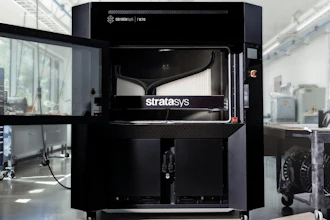
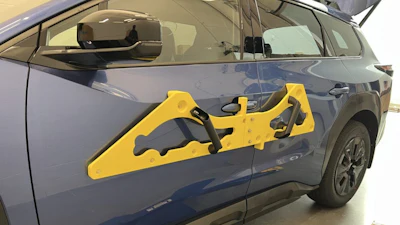
Toyota provides one of the clearest examples of how this shift is being applied at scale. Through a partnership with Stratasys spanning more than a decade, Toyota’s production engineering group established the Toyota Add Lab, an in‑house additive manufacturing center opened in January 2023 to accelerate factory innovation across its North American facilities. The results speak to what is possible when additive is integrated directly into operations. In one case, engineers redesigned a door assembly fixture using 3D printing, producing a lighter, more ergonomic tool on site in just days. In another, they developed a custom window alignment jig that turned a multi‑person task into a single‑operator process, improving both safety and throughput.
This is additive manufacturing applied not to the vehicle itself, but to the tools and workflows that determine how efficiently and safely vehicles are built. It also challenges the tendency in technology conversations to focus on the most dramatic use case, such as production parts that cannot be made any other way. Those applications matter and continue to grow. But in automotive manufacturing, some of the most valuable additive use cases are refreshingly straightforward.
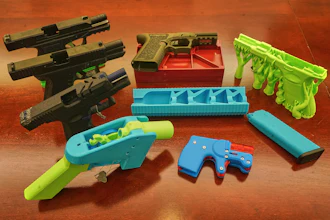
Assembly jigs. Alignment fixtures. Ergonomic hand tools that reduce worker fatigue. End‑of‑arm tooling for robotic cells. Inspection gauges. Line‑side holders and guides. These are the tools that directly shape manufacturing efficiency and safety, and they represent a vast volume of demand that many plants are only beginning to address through additive.
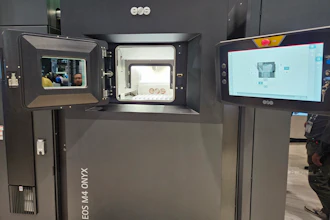
At the same time, throughput, repeatability, and material performance have advanced to the point where industrial polymer systems can reliably meet production requirements at scale. Modern platforms designed for industrial uptime and validated workflows have dispelled the long‑standing belief that additive manufacturing is too slow for production environments. This shift matters because the automotive industry faces sustained pressure to move faster while controlling costs.
Manufacturers are now challenged to support more variants, transition to EV platforms more quickly, and do so under tighter cost constraints. Tooling spend is subject to the same scrutiny as any other input. Additive manufacturing does not eliminate this pressure, but it offers manufacturers a powerful lever to produce exactly what is needed, when it is needed, without maintaining excess physical inventory.
Organizations seeing the greatest benefit from additive are asking the right questions. Where are our tooling bottlenecks? Where do lead times slow production? Where are we overspending on custom fabrication for low‑volume, high‑variability tools? Time and again, these questions point back to jigs, fixtures, and production aids that can be produced faster, iterated more easily, and managed more efficiently using additive manufacturing than through conventional methods.
There is also a growing supply chain dimension to consider. In an environment shaped by tariff sensitivity and uncertainty around the cost and availability of imported tooling components, the ability to produce critical manufacturing aids domestically offers a level of operational resilience that traditional inventory strategies struggle to match.
The automotive industry does not need to print the car to benefit from additive manufacturing. It needs to print the tools that build the car more efficiently and more safely. That requires responsiveness, agility, and greater empowerment on the factory floor. It also requires addressing long‑standing constraints that have been tolerated simply because no better alternative existed. Deployed strategically, additive manufacturing provides exactly that alternative.